

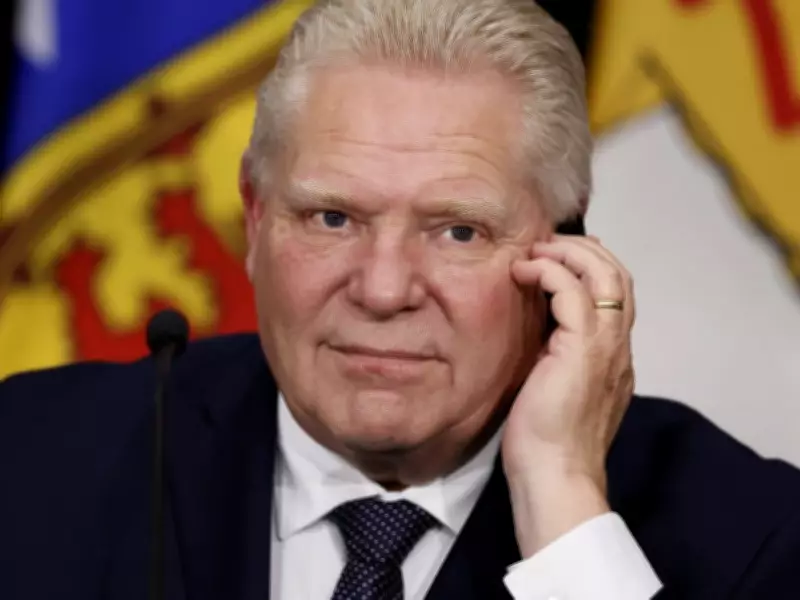
Ontario Premier Doug Ford Faces Fiscal Crossroads in 2026 Budget
Premier Doug Ford has consistently pledged to restore fiscal responsibility to Ontario's government, yet his tenure has seen a dramatic escalation in provincial borrowing. With the 2026 budget on the horizon, this moment represents a golden opportunity for Ford to deliver on his promises and steer the province away from a deepening debt crisis.
The Mounting Debt Burden
Over the past two decades, Ontario's debt has nearly tripled, creating a significant financial strain on taxpayers. A decade ago, the provincial debt stood at $154 billion, equating to approximately $12,139 per resident. Today, that figure has ballooned to $459 billion, or more than $28,200 for every Ontarian. This surge in borrowing has led to escalating interest payments that now consume a substantial portion of the budget.
In the 2025-26 fiscal year, taxpayers shelled out $16.2 billion to cover debt interest charges alone. To put this in perspective, the government spends over $3 billion more on interest than on post-secondary education. If debt interest were treated as a ministry, it would rank as the fourth-largest expenditure in the provincial budget. These funds could alternatively be used to construct hundreds of schools or implement broad-based tax relief, but instead, they flow to bondholders.

Broken Promises and Rising Costs
Before and after his 2018 election victory, Ford vowed to balance the budget and end reckless spending, declaring that "the party is over with the taxpayers' money." However, his government has added $121 billion to the provincial debt over nearly eight years in power, including a record $31.5 billion in the current fiscal year. Each dollar borrowed accrues interest, compounding the financial burden on future generations.
Projections indicate that the situation is worsening. Ontario's Financial Accountability Office forecasts that debt interest charges could rise by 5.6% annually, potentially exceeding $20 billion by 2029-30. Public concern is palpable, with a poll revealing that 75% of Ontario residents are worried about these mounting costs, which threaten to erode funding for essential services like healthcare and education.
A Path Forward in the 2026 Budget
To address this crisis, Ford must leverage the upcoming budget to implement decisive measures. One viable strategy involves cutting the $11.9 billion allocated to corporate welfare programs, a move the premier previously endorsed as a way to enhance business competitiveness through fairer tax reductions rather than selective subsidies. Additionally, emulating federal efforts to trim spending across the board could help rein in expenditures.
By turning off the debt taps and prioritizing tax cuts, Ford can not only fulfill his fiscal promises but also provide relief to Ontarians grappling with the rising cost of living. Success in the 2026 budget hinges on outlining a clear plan to curb borrowing and initiate sustainable tax reforms, thereby safeguarding the province's economic future from the perils of a debt spiral.






