

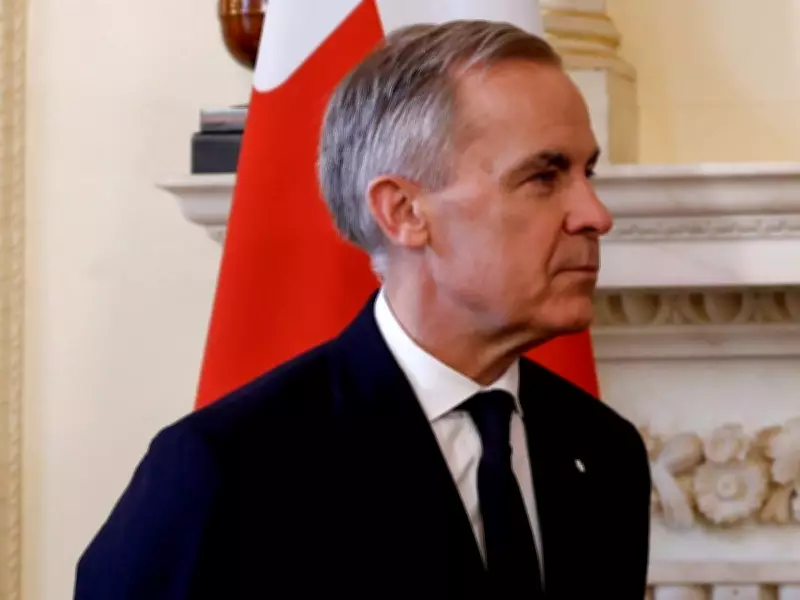
Growing Doubts Over Carney's Budget Balancing Promise
Prime Minister Mark Carney's commitment to balance the federal operating budget by the 2028-29 fiscal year is facing mounting skepticism from economic analysts and independent watchdogs. Critics argue that Carney's approach resembles former prime minister Justin Trudeau's unfulfilled promise of "three years of modest deficits" followed by a balanced budget, raising questions about the government's fiscal transparency.
Accounting Methods Under Scrutiny
A recent report from the Fraser Institute has joined a chorus of voices questioning Carney's definition of "balancing the budget" through what some describe as "spending less and investing more." The institute characterizes this approach as "hocus-pocus" designed to divert attention from the actual financial situation. The central issue revolves around the blurring of lines between operational spending—the day-to-day costs of running the government—and capital spending, which involves creating assets like infrastructure that enhance the national economy's productive capacity.
Carney has pledged to balance operational costs over the next three years while continuing to invest in capital projects. However, the controversy stems from his redefinition of these terms. Traditionally viewed operational expenses, such as corporate income tax expenditures, investment tax credits, and operating subsidies to companies, are now being classified as capital spending under Carney's framework.

Parliamentary Budget Officer's Findings
The federal parliamentary budget officer, in a November report analyzing Carney's first budget, found that "the government's definition of capital investments is overly expansive" compared to international public accounting standards. According to the PBO, approximately $94 billion—representing 30% of spending classified as capital investments—should properly be categorized as operational costs. If this reclassification were implemented, the day-to-day operating balance would remain in a deficit position, contradicting the government's claims of approaching balance.
The Fraser Institute reinforced this assessment, noting that "correcting this misclassification shows that the Carney government is set to fall short of its commitment to balance operating spending against revenues."
Historical Precedents and Political Reactions
Respected University of Calgary economist Trevor Tombe, writing in The Hub, drew parallels between Carney's approach and previous provincial experiments with similar accounting methods. Tombe referenced the Alberta government's attempt a decade ago to employ comparable tactics, which he described as creating "confusion and reduced transparency" that ultimately resulted in "a budgeting disaster that obscured the province's true financial position and weakened public accountability." The practice was eventually abandoned in Alberta.
Conservative Leader Pierre Poilievre has dismissed Carney's proposal as "cooking the books," a characterization that Tombe suggests is justified by historical precedent. As Tombe noted, "Carney's financial sleight of hand will not actually balance the budget," indicating that the fundamental fiscal challenges remain unaddressed despite the government's optimistic projections.
The growing scrutiny highlights broader concerns about fiscal transparency and accountability in federal budgeting practices, with multiple independent analyses suggesting that the government's current approach may not withstand rigorous accounting standards.






