

U.S. Military Intensifies Search for Missing Pilot in Iran After Warplane Downed
The U.S. military is conducting a frantic search for a missing pilot over a remote mountainous region in southwestern Iran, following the downing of an American warplane by Iranian forces. This incident marks the first loss of U.S. aircraft in Iranian territory during the ongoing conflict, now in its sixth week, and could signal a significant escalation in hostilities.
Details of the Downed Aircraft and Search Efforts
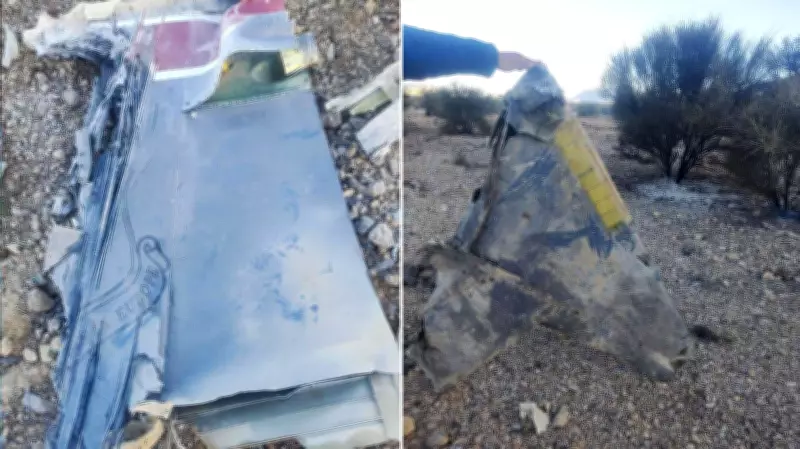
Iranian state media identified the downed plane as a U.S. F-15E Strike Eagle, a fighter jet that carries a pilot and a weapons system officer. The attack occurred on Friday, with one service member rescued and at least one missing. The search is focused on the Kohgiluyeh and Boyer-Ahmad province, but neither the White House nor the Pentagon has released public information about the incident. In a brief statement, the Pentagon confirmed receiving notification of "an aircraft being shot down" in the Middle East, without providing further details.
Separately, Iranian state media reported that a U.S. A-10 attack aircraft crashed in the Persian Gulf after being struck by Iranian defense forces, though U.S. officials have not confirmed this. An anchor on a TV channel affiliated with Iranian state television urged residents to hand over any "enemy pilot" to the police, promising a reward, marking the first such public appeal during the war.

Escalating Regional Conflict and Broader Impacts
The conflict, launched by the U.S. and Israel on February 28, has rippled across the region, killing thousands, upending global markets, cutting off key shipping routes, and spiking fuel prices. Missile and drone strikes continued on Saturday, with an apparent Iranian drone damaging the Dubai headquarters of the U.S. technology giant Oracle. Iran's paramilitary Revolutionary Guard has accused major tech companies, including Oracle, of involvement in "terrorist espionage" operations, declaring them legitimate targets.
In a related development, the Atomic Energy Organization of Iran announced that an airstrike hit near its Bushehr nuclear facility, killing a security guard and damaging a support building. This is the fourth time the facility has been targeted during the war. Additionally, Iran's parliament speaker, Mohammad Bagher Qalibaf, issued a veiled threat to disrupt traffic through the Bab-el-Mandeb Strait, a strategic waterway, following Iran's existing chokehold on the Strait of Hormuz, which has already sent fuel prices skyrocketing and jolted the world economy.
Political Context and Casualty Figures
The downing of the military planes came just two days after President Donald Trump stated in a national address that the U.S. has "beaten and completely decimated Iran" and was "going to finish the job." Trump has vacillated on America's role in the Strait of Hormuz, alternately threatening Iran and telling other nations to secure their own oil. In a social media post on Friday, he suggested that with more time, the U.S. could "open the Hormuz Strait, take the oil, and make a fortune."
Casualty figures from the conflict are mounting. More than 1,900 people have been killed in Iran since the war began, with civilian casualties clustered around strikes on security and state-linked sites, according to a review by the Armed Conflict Location and Event Data group. In Gulf Arab states and the occupied West Bank, over two dozen people have died, while 19 have been reported dead in Israel and 13 U.S. service members have been killed. In Lebanon, over 1,300 people have been killed and more than 1 million displaced, with ten Israeli soldiers also reported dead there.
The U.N. Security Council is expected to address Iran's stranglehold on the Strait of Hormuz on Saturday, as world leaders struggle to mitigate the economic and humanitarian impacts of the ongoing war.






