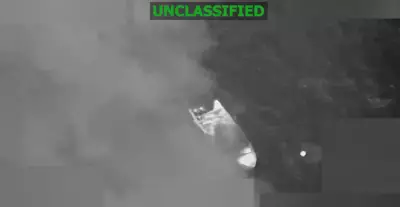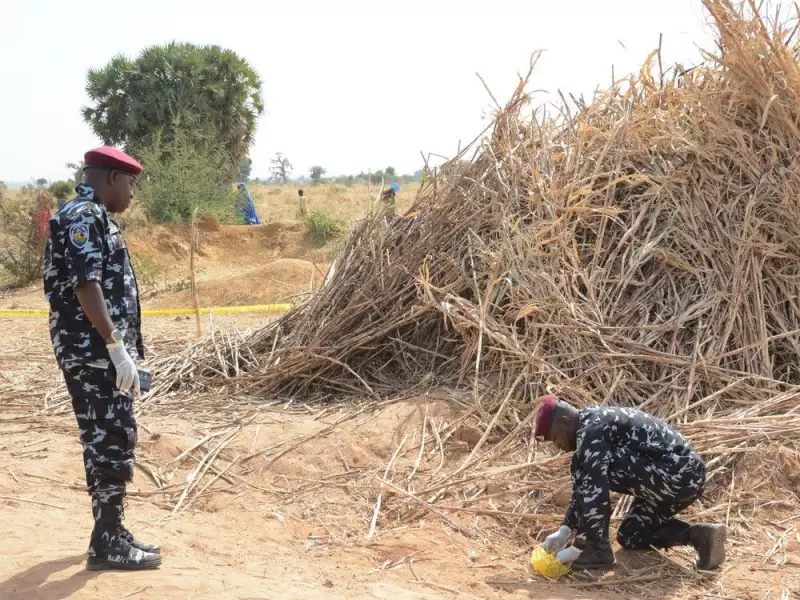
In a significant military escalation, United States forces carried out a series of deadly airstrikes in northwestern Nigeria on Christmas Day, targeting Islamic State militants. The operation, confirmed by both U.S. and Nigerian authorities, represents the first direct U.S. military action in Nigeria under the administration of President Donald Trump.
Trump's Warning and Christmas Day Action
President Trump announced the strikes on his Truth Social platform, stating U.S. forces had conducted "powerful and deadly" strikes against Islamic State "terrorists." He directly linked the action to previous warnings about violence against Christians in the region.
"I have previously warned these Terrorists that if they did not stop the slaughtering of Christians, there would be hell to pay, and tonight, there was," Trump wrote. He provocatively added, "MERRY CHRISTMAS to all, including the dead Terrorists, of which there will be many more if their slaughter of Christians continues."

Details of the Operation and Confirmation
The U.S. Africa Command (AFRICOM) stated the operation resulted in the deaths of "multiple ISIS terrorists" in Sokoto state. The command emphasized the strikes were conducted at the request of the Nigerian government, though precise casualty figures were not released.
The Nigerian Foreign Ministry confirmed the events early on Friday, December 26, 2025, describing them as "precision hits on terrorist targets." The ministry's statement noted Nigeria's ongoing security cooperation with international partners, including the United States.
U.S. Defense Secretary Pete Hegseth expressed being "grateful for Nigerian government support & cooperation" in a post on social media platform X.
Background of Tensions and Broader Conflict
These strikes follow a months-long diplomatic offensive by the Trump administration focusing on Nigeria. In October and November 2025, President Trump unexpectedly criticized the West African nation, asserting that Christians faced an "existential threat" and "genocide" amid the country's complex web of armed conflicts.
Trump had threatened to cut off all U.S. aid to Abuja if it "continues to allow the killing of Christians" and promised potential military action "with guns-a-blazing." The U.S. recently placed Nigeria back on a list of countries of "particular concern" regarding religious freedom, imposing visa restrictions.
Analysts and the Nigerian government itself often reject framing the nation's violence purely in religious terms, a narrative promoted by some Christian advocacy groups in the West. They argue the conflicts are driven more by political, economic, and regional factors.
Nigeria's security landscape is fractured:
- The northeast has endured a 15-year jihadist insurgency by Boko Haram and its splinter groups, claiming over 40,000 lives and displacing two million.
- The northwest and central regions are plagued by criminal gangs known as "bandits" who raid villages for kidnapping and theft.
- Just days before the U.S. strike, an explosion at a mosque in Maiduguri killed at least seven worshippers, though no group claimed responsibility.
The Christmas Day strikes mark a new chapter in U.S. military involvement in Nigeria, directly tying American counter-terrorism actions to the politically charged issue of international religious persecution.