The U.S. military struck Iran for a second day, and Tehran retaliated against American allies in the Persian Gulf, raising fears of a return to war after little progress in efforts to secure a diplomatic outcome.
U.S. Strikes and Iranian Retaliation
U.S. Central Command said on X it hit about 90 targets on Wednesday — after 80 the previous day — “to further degrade” the Islamic Republic’s ability to attack commercial shipping in the Strait of Hormuz. Iran responded by targeting U.S. bases in Bahrain, Kuwait and Qatar, according to the semi-official Iranian Students’ News Agency.
“Every time they hit us, we’ll hit them 20,” U.S. President Donald Trump told reporters on Air Force One. “I don’t know. We’d win it very quickly. We have many ways we could win,” he added when asked whether the U.S. and Iran were returning to an all-out war.

Collapse of Interim Peace Agreement
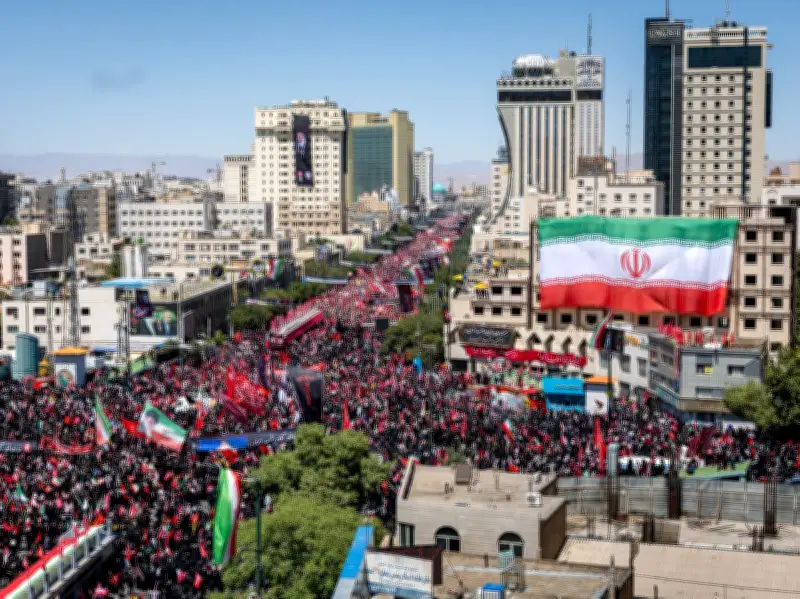
The attacks came about three weeks after the U.S. and Iran signed an interim peace agreement that triggered a 60-day negotiation period to resolve outstanding issues in the conflict. The talks, which are on hold while Iran conducts a week-long mass funeral for late Supreme Leader Ali Khamenei, have yet to achieve a significant breakthrough.
The U.S. has revoked a waiver allowing new sales of Iranian oil — a condition of the interim deal — in response to attacks on ships in the Strait of Hormuz that the administration blamed on the Islamic Republic. Traffic through the waterway came to a near standstill on Thursday, and Iran’s insistence that it retains control of the passage is one of many issues on which the two sides remain far apart.
Impact on Oil Markets
Oil prices fluctuated on Thursday after surging following the outbreak of fighting the previous day. Brent crude, the global benchmark, fell about 0.5 per cent to US$77.50 a barrel, after gaining more than five per cent on Wednesday. The Strait of Hormuz is a critical chokepoint for global oil shipments, and any disruption to traffic through the waterway could have significant implications for energy markets.