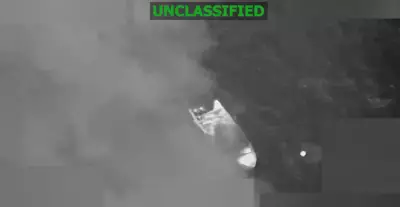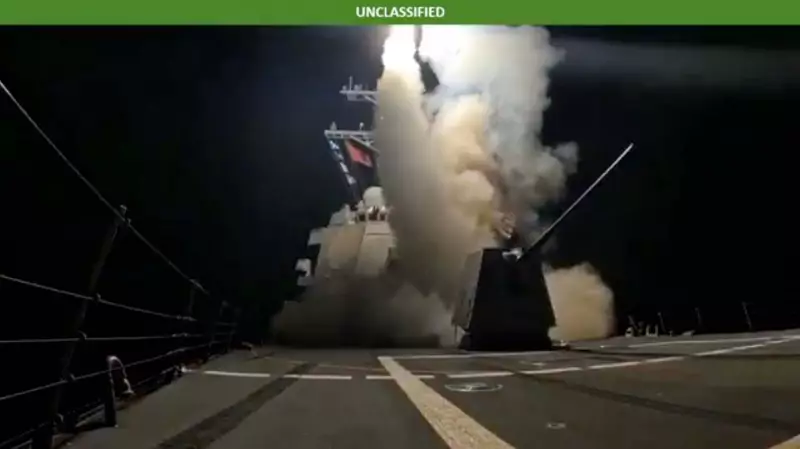
In a significant escalation of foreign military involvement, the United States conducted airstrikes against Islamic State group militants in northwestern Nigeria on Thursday, December 25, 2025. The operation, directed by U.S. President Donald Trump, was described as a "powerful and deadly" strike targeting ISIS fighters accused of killing innocent Christians.
A Complex Militant Landscape in Nigeria's Northwest
While U.S. and Nigerian officials confirmed the strikes were part of intelligence-sharing and strategic coordination, they did not specify the exact faction hit. Security analysts, however, point to the Islamic State Sahel Province (ISSP), known locally as Lakurawa, as the likely target. This group has become increasingly lethal in border states like Sokoto and Kebbi over the past year.
Lakurawa's origins are complex. It initially entered Nigeria's Sokoto state around 2017 at the invitation of traditional authorities seeking protection from bandit groups. According to James Barnett of the Hudson Institute, the militants later overstayed their welcome, enforcing a harsh interpretation of Sharia law and clashing with community leaders.

"Communities now openly say that Lakurawa are more oppressive and dangerous than the bandits they claim to protect them from," stated Malik Samuel, a researcher with Good Governance Africa. The group is accused of controlling territories and carrying out killings, kidnappings, rape, and armed robbery.
Deep-Rooted Governance Crisis Fuels Conflict
Experts emphasize that Nigeria's security woes extend far beyond a simple military challenge. The crisis is deeply rooted in governance failures and social issues. Remote conflict hotspots, where groups like Lakurawa operate, often suffer from a near-total absence of state presence, high poverty, hunger, and unemployment.
"The absence of the state in remote communities is making it easy for non-state actors to come in and present themselves to the people as the best alternative government," explained Samuel. This view is echoed by Nigeria’s Minister of Defense, Christopher Musa, who has stated that military action constitutes only 30% of the solution, with the remaining 70% dependent on good governance.
The group's expansion was also facilitated by regional instability. The Nigerian military has noted that Lakurawa became more active following a 2023 military coup in neighboring Niger, which fractured relations and hampered multinational security operations along the porous border.
U.S. Intervention: A Crucial Lifeline for an Overstretched Military
The American airstrikes are widely seen by analysts as critical support for Nigeria's security forces. The military is notoriously overstretched and outgunned as it battles multiple armed groups across different regions simultaneously.
In states like Sokoto, the Nigerian Air Force has conducted its own airstrikes, and the government has embarked on mass recruitment. However, these operations are often not sustained, allowing militants to easily relocate on motorcycles through vast northern forests. They also frequently use hostages, including schoolchildren, as human shields, complicating aerial attacks.
U.S. Defense Secretary Pete Hegseth hinted at continued action in a social media post about the strikes, stating simply: "More to come...". The long-term impact of this direct U.S. military involvement in Nigeria's complex internal security landscape remains to be seen, marking a pivotal moment in a conflict that has plagued the region for years.