Trump's Threatened Strikes on Iran Could Backfire, Risking Prolonged Conflict
U.S. President Donald Trump has indicated he is weighing limited military strikes to compel Iran into signing a new nuclear agreement. However, defense analysts warn that such aggressive tactics could have the opposite effect, potentially sparking a new and destabilizing conflict in the Middle East.
Military Buildup and Conflicting Signals
The Pentagon has orchestrated a significant military deployment to the region, including two aircraft carriers, fighter jets, and refueling planes. This buildup provides Trump with the option to launch either limited or extended operations against Iran. Despite this show of force, Trump and other administration officials have offered conflicting public statements regarding their specific goals for a new deal with Tehran.
Experts argue that bombing Iran during ongoing negotiations could derail diplomatic efforts entirely. "He's not going to get a diplomatic agreement out of the Iranians if he attacks them again," said Barbara Slavin, a fellow at the Stimson Center in Washington. She added that even the threat of military action alone could make Iran less willing to negotiate.

Risk of Retaliation and Escalation
A senior regional government official, who requested anonymity, stated that Tehran would likely suspend its participation in talks if the U.S. launched a strike. The situation is further complicated by Trump's imposition of a 10 to 15-day deadline for progress, though it remains unclear what specific objectives a new round of airstrikes would achieve.
Historically, Iran has not always acted in accordance with U.S. assumptions. "Limited strike campaigns don't always unfold as envisioned," noted Becca Wasser, the defense lead at Bloomberg Economics. While Trump has demonstrated a preference for swift military operations—such as brief campaigns in Yemen, Syria, and Nigeria, as well as the raid that captured Venezuela's Nicolas Maduro—an attack on Iran could provoke a retaliation that draws the U.S. into a more protracted conflict.
Complex Regional Dynamics
Israeli Prime Minister Benjamin Netanyahu, whose administration has recently engaged in conflicts in Gaza and Lebanon while bombing targets in Syria and Iran, has long advocated for U.S. airstrikes on Iran. He recently traveled to Washington to push for more comprehensive demands in the ongoing diplomatic talks between the White House and Tehran.
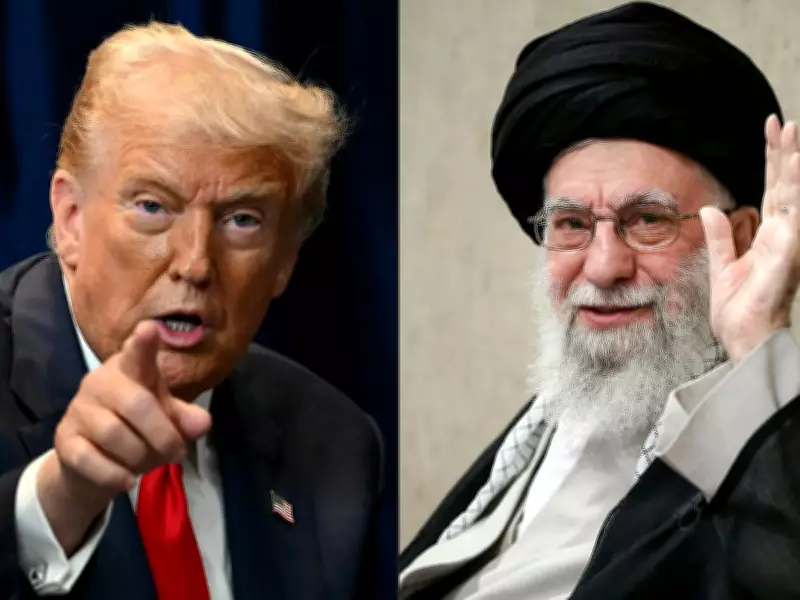
When asked about his message to the Iranian people during a Friday news conference, Trump responded, "They better negotiate a fair deal. They better negotiate." Despite the recent threats exchanged between Trump and Iran's Supreme Leader Ayatollah Ali Khamenei, analysts suggest that neither side ultimately desires a full-scale war.
The U.S. and Israel previously bombed Iran's nuclear sites and air defenses in June, with Trump claiming that key enrichment facilities were "completely and totally obliterated." Potential future targets could include Iran's ballistic missiles, but this carries the risk of prompting Tehran to launch them preemptively at U.S. or allied targets before they are destroyed.
In summary, while military pressure may seem like a straightforward tactic to force a nuclear agreement, the complex realities of Iranian retaliation and regional instability mean that Trump's threatened strikes could easily backfire, leading to a prolonged and dangerous conflict rather than a diplomatic resolution.