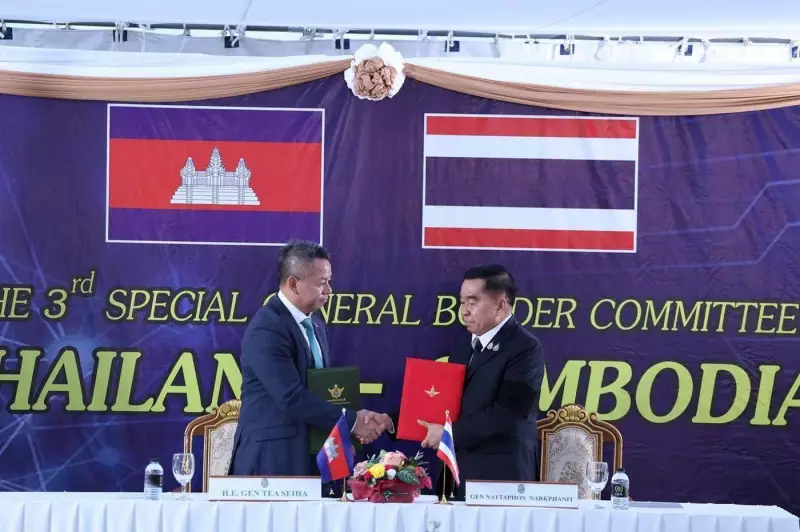
In a significant move towards regional stability, the neighboring nations of Thailand and Cambodia have inked a new ceasefire agreement aimed at definitively ending a period of border hostilities. The diplomatic breakthrough was achieved on Saturday, December 27, 2025, during a high-level meeting between the two countries' top defense officials.
High-Level Meeting Seals the Deal
The agreement was finalized at the General Border Committee Meeting held in Thailand's Chanthaburi Province. The pivotal signing ceremony saw Cambodian Defense Minister Tea Seiha and Thai Defense Minister Natthaphon Narkphanit come together to formalize the pact. A photograph released by the Agence Kampuchea Press (AKP) captured the two ministers standing side-by-side at the event, symbolizing a renewed commitment to peace.
Putting an End to Border Tensions
This new ceasefire is designed to halt the sporadic but damaging clashes that have occurred along the shared frontier. While the specific details of the triggering incidents were not elaborated in the initial announcement, the agreement represents a clear political will from both governments to de-escalate military tensions. The meeting in Chanthaburi served as the primary forum for negotiating the terms that will govern the cessation of hostilities and, hopefully, pave the way for more permanent border resolutions.

A Path Forward for Southeast Asia
The successful signing of this accord marks a positive step for security in Southeast Asia. For local communities living near the border, the ceasefire promises a return to normalcy and safety. Observers will now watch closely to see how the terms of the agreement are implemented on the ground by both militaries. The collaboration between Defense Ministers Seiha and Narkphanit underscores the importance of direct dialogue in resolving international disputes.
The December 27, 2025 agreement adds a note of diplomatic progress to the end of the year, demonstrating that longstanding issues can be addressed through concerted negotiation and mutual interest in stability.