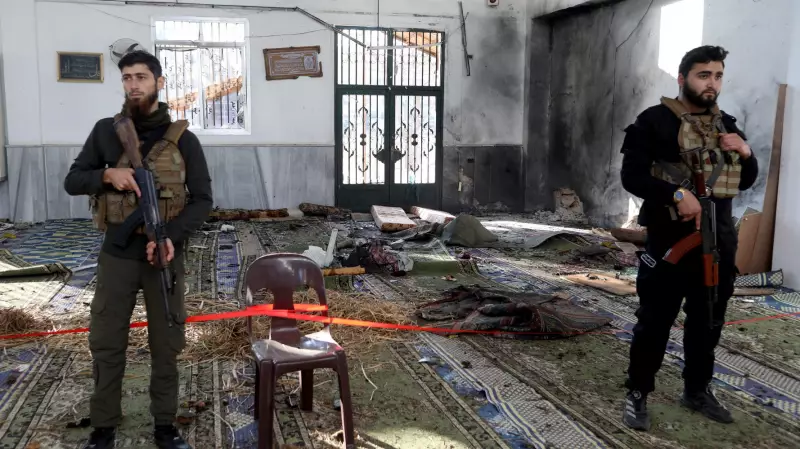
A powerful explosion ripped through a mosque in the Syrian city of Homs during Friday prayers, killing at least eight people and wounding 18 others, authorities reported. The attack underscores the persistent sectarian and political divisions destabilizing the country, even as large-scale combat has diminished.
Scene of Devastation in Wadi al-Dahab
The blast occurred on December 26, 2025, inside the Imam Ali ibn Abi Talib Mosque, located in the Wadi al-Dahab neighborhood of Homs, Syria's third-largest city. The area is predominantly inhabited by the Alawite religious minority.
Images released by Syria's state-run Arab News Agency (SANA) depicted a grim scene: blood stained the mosque's carpets, walls were pockmarked with holes, windows were shattered, and there was significant fire damage.

Syria's Interior Ministry stated that preliminary investigations indicate explosive devices were planted inside the mosque. A security cordon was immediately established around the building as authorities launched a search for the perpetrators.
Claim of Responsibility and Sectarian Targeting
A little-known group calling itself Saraya Ansar al-Sunna claimed responsibility for the attack in a statement posted on its Telegram channel. The same group had previously claimed a suicide attack in June 2025 on a Greek Orthodox church on the outskirts of Damascus, which killed 25 people.
In a statement, the Supreme Alawite Islamic Council in Syria and the Diaspora described the mosque bombing as "a continuation of the organized extremist terrorism specifically targeting the Alawite community." The council held the Syrian government "fully and directly responsible" for the attack.
The Syrian government, however, condemned the bombing, saying it was part of "repeated desperate attempts to undermine security and stability." The Foreign Ministry reiterated Syria's "firm stance in combating terrorism in all its forms."
Eyewitness Account and Regional Fallout
The mosque's deputy imam told state-run Al-Ikhbariyah television that worshippers were praying when they "heard a loud explosion that knocked us to the ground." He described a subsequent fire and a frantic rescue effort by those who were not wounded. "The explosion was huge," he said. "It shattered the mosque's windows and caused a fire that burned copies of the Holy Quran."
The attack drew condemnation from neighboring countries, including Saudi Arabia, Jordan, and Lebanon. Lebanese President Joseph Aoun reaffirmed "Lebanon's support for Syria in its fight against terrorism."
The bombing occurred against a backdrop of ongoing, low-level violence. Just days prior, on Monday, December 23, clashes erupted in Aleppo between Syrian government forces and Kurdish-led fighters, leading to a temporary ceasefire.
This incident highlights the fragile security situation in Syria following the fall of President Bashar Assad in 2024 and the ongoing crackdowns against his Alawite sect, illustrating that the nation's deep-seated conflicts are far from resolved.