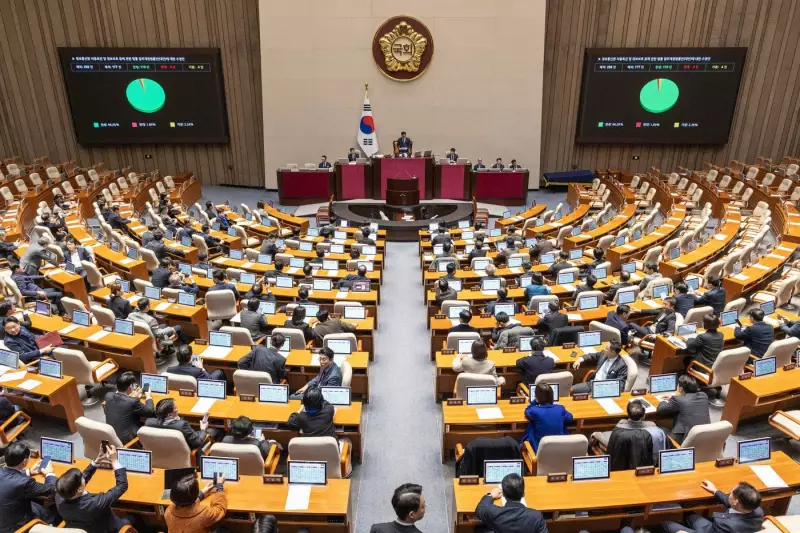
In a move that has ignited a fierce debate over freedom of the press, South Korea's National Assembly has passed a contentious new bill targeting the spread of false information. The legislation, approved on Wednesday, December 24, 2025, empowers courts to impose heavy punitive damages on both traditional news outlets and internet media platforms found to have published "false or fabricated information."
The Core of the Controversial Legislation
The bill was passed at the National Assembly in Seoul, despite significant warnings from media advocacy groups and opposition lawmakers who argue it could be used as a tool for censorship. The law's central mechanism is the threat of severe financial penalties, designed to deter the dissemination of what it defines as deliberately misleading content. Proponents of the bill contend it is a necessary measure to combat the rampant spread of misinformation and disinformation that can destabilize society and harm individuals.
The timing of the vote, on Christmas Eve, has also drawn attention, with critics suggesting it was strategically scheduled to minimize public and media scrutiny. The legislation does not specify a precise monetary cap for damages, leaving it to judicial discretion, which further fuels concerns about its potential for arbitrary application.

Balancing Truth and Freedom: The Global Context
This development places South Korea at the center of a global struggle to regulate online spaces and media content without infringing on democratic principles. Many democracies worldwide are grappling with similar challenges, seeking frameworks to hold powerful platforms accountable while protecting free speech. The South Korean model, with its emphasis on crippling financial repercussions, is being watched closely as a potential precedent.
Opponents fear the law's vague language regarding "false" information could be weaponized by powerful entities, including the government or large corporations, to silence critical reporting or legitimate investigative journalism. The chilling effect, they argue, could lead to self-censorship where media organizations avoid controversial topics for fear of expensive lawsuits, regardless of the story's veracity.
Implications for Media and Public Discourse
The passage of this bill marks a significant shift in South Korea's media landscape. For internet media and social media companies, it introduces a new layer of legal liability that will likely force a review of content moderation policies and fact-checking protocols. Traditional news organizations now face not just reputational damage for errors, but potentially existential financial threats.
The international community, including press freedom organizations, has expressed alarm. They warn that such laws, even if well-intentioned, often have a corrosive effect on public discourse by discouraging the scrutiny of those in power. The coming months will be critical as the judiciary begins to interpret and apply the new law, setting the first real-world precedents for what constitutes punishable "false information" in South Korea.