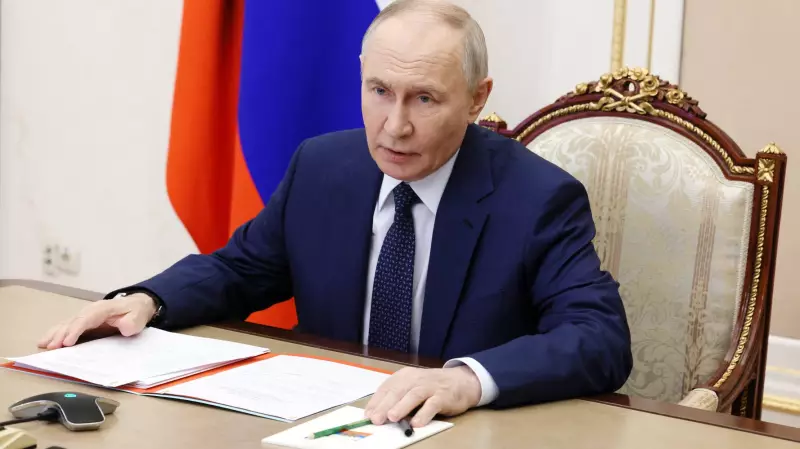
Tensions between Russia and Ukraine escalated sharply on Monday after Moscow accused Kyiv of attempting a drone strike on President Vladimir Putin's personal residence. Russia vowed military retaliation for what it called an act of "state terrorism," while Ukraine dismissed the claim as a baseless fabrication aimed at sabotaging ongoing peace negotiations.
Alleged Attack and Diplomatic Fallout
Russian Foreign Minister Sergei Lavrov stated that on December 28-29, Ukrainian forces launched 91 long-range drones at Putin's residence in the Novgorod region, west of Moscow. He claimed Russian air defences destroyed all the drones, resulting in no casualties or damage. Lavrov warned that "such reckless actions will not go unanswered" and indicated Russian armed forces had already selected targets for retaliatory strikes.
The accusation prompted an immediate and angry denial from Ukrainian President Volodymyr Zelenskiy, who labelled it "a complete fabrication." Zelenskiy suggested Russia was creating a pretext to justify future strikes on government buildings in Kyiv. "It is clear that for the Russians, if there is no scandal between us and America, and we are making progress – for them it is a failure," Zelenskiy said via WhatsApp, referencing his meeting with U.S. President Donald Trump the previous day.

The Kremlin announced it was reviewing its stance in peace negotiations in response to the alleged attack but stated it would not withdraw from talks entirely.
Trump's Role and Stalled Peace Efforts
The diplomatic row casts a shadow over recent efforts to end the war, which began with Russia's full-scale invasion in February 2022. U.S. President Donald Trump revealed he learned of the alleged attack directly from Putin during a phone call on Monday morning. "It's one thing to be offensive. It's another thing to attack his house. It's not the right time to do any of that," Trump told reporters, expressing anger over the incident.
This development followed a meeting between Trump and Zelenskiy in Florida on Sunday, where both leaders indicated progress. Trump said they were "getting a lot closer, maybe very close" to a deal, though "thorny" territorial issues remained unresolved. Zelenskiy confirmed a bilateral agreement on security guarantees for Ukraine had been outlined, though details were not finalized.
However, after speaking with Putin, Trump admitted he had no further information on the drone claim and said, "We'll find out" when asked if U.S. intelligence could verify it.
Military Stalemate and Unresolved Territorial Demands
Amid the accusations, the core disputes blocking a peace deal remain entrenched. On Monday, Putin ordered his generals to continue offensive operations to secure full control of Ukraine's Zaporizhzhia region, of which Russia already holds about 75%. Commander Mikhail Teplinsky reported Russian forces were within 15 km (9.3 miles) of the city of Zaporizhzhia.
Kyiv and Moscow presented irreconcilable positions on key territories:
- Russia demands Ukraine withdraw troops from the remaining parts of the Donetsk region it does not occupy, and insists on keeping control of Donbas, Zaporizhzhia, Kherson, and Crimea.
- Ukraine seeks a ceasefire along current front lines and the restoration of its sovereign territory, which is internationally recognized.
- Zelenskiy identified two major unresolved issues: control of the Zaporizhzhia Nuclear Power Plant and the final status of the Donbas area.
Russian Foreign Minister Lavrov reiterated that the "strategic initiative rests wholly with the Russian army," signaling a hardline approach. Zelenskiy, in a late Monday interview, stated bluntly, "I don't trust Putin and he doesn't want success for Ukraine." He emphasized that Ukraine cannot win the war without continued U.S. support.
The unverified allegation of an attack on Putin's home introduces a volatile new element into an already fragile diplomatic process, with the threat of renewed Russian retaliation looming large over any prospect for near-term peace.