Last week, the United States and Iran signed a memorandum of understanding aimed at ending the war that began in February. The agreement extends a ceasefire, reopens the Strait of Hormuz and, most consequentially, clears the way for Iran to resume oil sales. Nuclear questions that started the war are intended to be addressed over the next two months. What Tehran gets now is a reprieve, a free hand to crush dissent at home, a nuclear program left intact for now, and money. What Tehran will do with that money should concern us all.
Iran's Track Record of Funding Proxies
Writing in the New York Post, Mark Dubowitz and Miad Maleki of the Foundation for Defense of Democracies argue that the regime’s trapped oil revenue—tens of billions of dollars piled up in foreign accounts it cannot freely repatriate—is the single most powerful non-military lever the West holds, and this deal begins to release it. After the 2015 nuclear accord normalized Iran’s oil exports, Dubowitz notes, its military budget rose by roughly 90 per cent in the first year, and the windfall flowed onward to Hezbollah, Hamas and the Houthis. Money that reaches Tehran does not stay in Tehran. It funds the Islamic Revolutionary Guard Corps (IRGC) and the proxies the regime uses to project violence outward.
Violence Lands on Canadian Soil
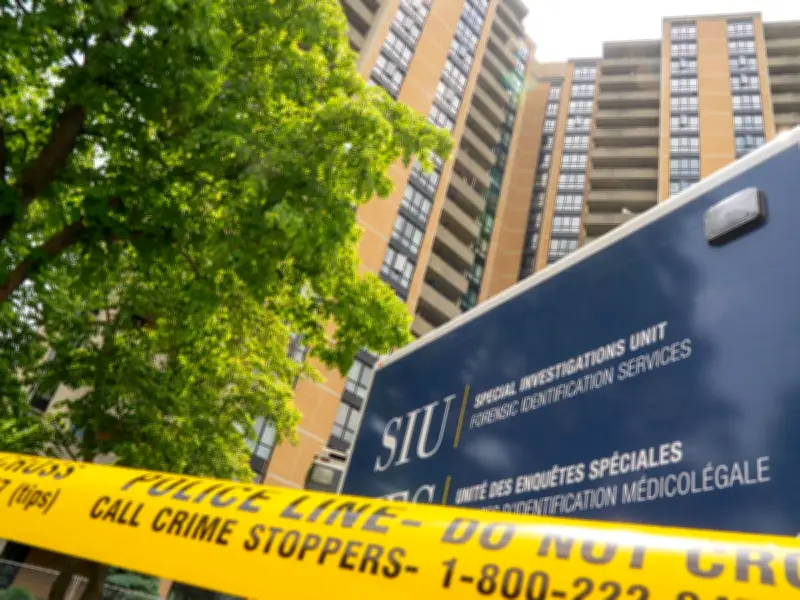
Canadians have reason to watch where that violence lands. On June 11, Const. Marc Pinizzotto, a 43-year-old member of the Toronto Police Service’s Emergency Task Force, was shot and killed while executing a search warrant. The raid was part of an investigation into the March shooting at the U.S. consulate in Toronto and a wider series of attacks across the region, including shootings at synagogues.

American prosecutors have charged Mohammad Baqer Saad Dawood Al-Saadi, an Iraqi national they describe as a senior figure in Kata’ib Hizballah and the IRGC, with terrorism offences, including an alleged plot to attack a Manhattan synagogue. The complaint also accuses him of co-ordinating two attacks in Canada, carried out in the name of a Kata’ib Hizballah front group.
Iran's Use of 'Criminals for Hire'
In a recorded call cited by the FBI, Al-Saadi allegedly boasted that his “people” were behind attacks in Canada. These remain allegations, and the courts will test them. But the shape of it is clear enough. This is increasingly how Iran fights—not by sending its own operatives, but by hiring local criminals to do its dirty work. Toronto’s police chief has described a network of “criminals for hire,” in which young people are recruited through encrypted apps such as Signal and Telegram, paid modest sums and required to film their attacks, using U.S.-sourced handguns that have been passed between shooters and tied to 27 shootings throughout the region. The method buys the regime deniability and a steady supply of disposable labour, and it blurs the line between ordinary street crime and state-directed terror.
As Ottawa considers its response to the thawing U.S.-Iranian relations, it must remember that the Islamic regime is not our friend. The memorandum of understanding may bring a temporary peace, but the underlying threat from Tehran remains, and Canadian lives are at stake.