

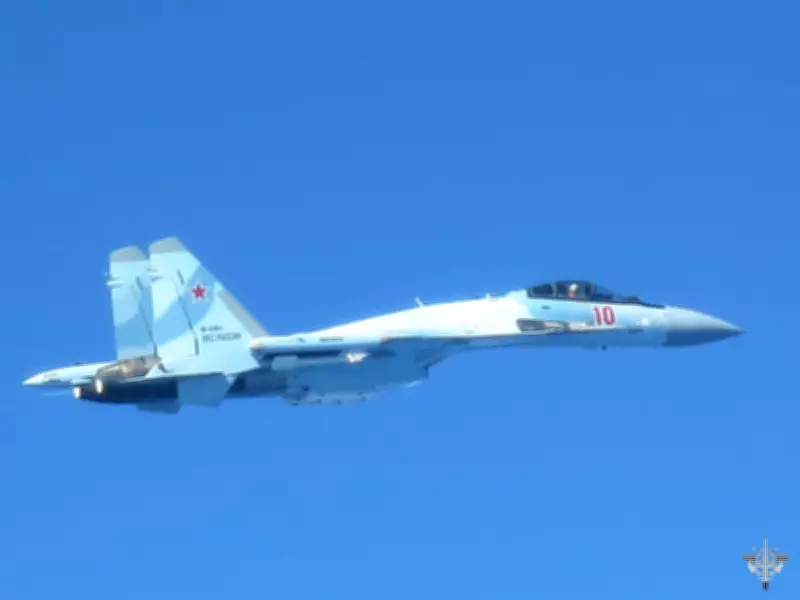
NATO Forces Intercept Russian Military Aircraft Over Baltic Sea
In a significant military incident, NATO forces have intercepted Russian military aircraft, including advanced Su-35 fighter jets, while they were flying over the Baltic Sea. This event, which occurred recently, underscores the ongoing geopolitical tensions in the region and highlights the vigilance of NATO's defense operations.
Details of the Interception
The interception involved multiple Russian aircraft, with visual confirmation provided by the French Army through photographs released on April 20, 2026. The images show a Russian Su-35 fighter jet maneuvering over the Baltic Sea, a strategic waterway bordered by NATO member states. NATO officials have stated that such flights are monitored closely to ensure regional security and adherence to international airspace regulations.
This incident is part of a pattern of increased military activity by Russia in the Baltic region, which has been a focal point of NATO's defense strategies. The Baltic Sea is critical for trade and security, making any unauthorized or provocative flights a concern for allied nations.

Broader Context and Implications
The interception comes amid a backdrop of heightened global tensions, with other news highlighting issues such as Japan's recent policy change to allow lethal weapons exports, signaling shifts in postwar pacifist stances. Additionally, domestic events in Canada, like the formation of a new Canada-U.S. advisory council and debates over trade policies, reflect the interconnected nature of international relations and defense matters.
NATO's response to these flights is routine but significant, as it demonstrates the alliance's commitment to collective defense under Article 5 of the North Atlantic Treaty. Military analysts note that such interceptions serve as a deterrent against potential aggression and help maintain stability in Europe.
Regional and Global Reactions
While no immediate escalation followed this interception, it has sparked discussions among defense experts about the need for continued vigilance. The Baltic states, in particular, have expressed support for NATO's actions, emphasizing the importance of air policing missions in safeguarding their sovereignty.
In related developments, other global events, such as U.S. lawmakers considering sanctions and Canada's emissions data showing slowed reductions, illustrate the complex web of political, environmental, and security challenges facing nations today. However, the focus remains on how such military incidents could influence diplomatic relations and defense postures in the coming months.
Overall, this interception by NATO forces over the Baltic Sea is a reminder of the persistent threats in the region and the ongoing efforts to uphold international security norms through coordinated defense measures.






