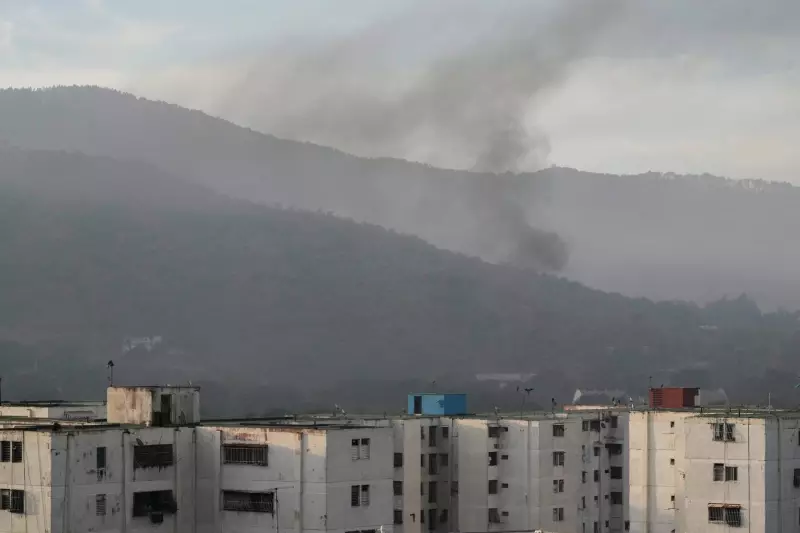
The dramatic capture of Venezuelan President Nicolas Maduro and his wife by United States forces has sent shockwaves through the Caribbean, causing severe disruptions to holiday travel with hundreds of flights canceled across the region.
Operation Stuns Region, Grounds Air Travel
In a stunning operation on Saturday, January 3, 2026, U.S. forces successfully detained Venezuelan leader Nicolas Maduro and his wife. The action, which occurred at Fort Tiuna, the main military garrison in Caracas, was marked by multiple explosions and aircraft activity, as captured in Associated Press photographs showing smoke rising over the compound.
The immediate aftermath of the high-stakes geopolitical event rippled across the Caribbean's aviation network. Airports and airlines, facing sudden security reassessments and uncertain airspace conditions, were forced to cancel hundreds of scheduled flights. This created a travel nightmare for thousands of tourists and residents attempting to move between islands or return home after the holiday season.

Wider Fallout and International Response
The United States has announced plans to prosecute the captured Venezuelan leader. The operation and its chaotic aftermath have drawn responses from the international community, including Canada. Canada's foreign minister has issued a formal response to the U.S.-led capture, highlighting the cross-border implications of the event.
While the primary news focuses on the capture and travel disruption, the broader news cycle on January 3 included other significant stories, from a major sports signing—the Toronto Blue Jays reportedly signing Japanese slugger Kazuma Okamoto—to domestic Canadian issues like a fog advisory for Calgary and much of Alberta, and Canada's decisive 7-1 victory over Slovakia at the world junior hockey championship.
The direct link between the military action in Venezuela and the paralysis of Caribbean air travel underscores the interconnected nature of regional stability and global transportation systems. The cancellations serve as a stark, immediate consequence of the sudden power shift in Caracas.
Uncertainty for Travelers and the Region
For now, travelers remain stranded or face complicated rebooking scenarios as airlines scramble to adjust their schedules in an unpredictable environment. The situation highlights how geopolitical crises can instantly impact global mobility, turning vacation hubs into zones of uncertainty.
The coming days will be critical in determining how quickly Caribbean air travel normalizes and what the long-term repercussions of Maduro's capture will be for the region's political and economic landscape.