Israeli Military Kills Four Lebanese Rescue Workers in Targeted Strikes
The Israeli military conducted three consecutive, targeted strikes on Wednesday in southern Lebanon, resulting in the deaths of four Lebanese rescue workers and injuries to six others, according to paramedic groups. These attacks occurred in the village of Mayfadoun, near Nabatiyeh, and highlight the escalating human toll of the Israeli campaign against Hezbollah, even as historic talks between the two nations were held in Washington the previous day.
Details of the Attacks on Medical Teams
The strikes unfolded in a devastating sequence: first hitting a team from the Islamic Health Committee responding to a distress call from wounded civilians, then targeting a second group attempting to aid their injured colleagues, and finally striking a third team rushing to assist the initial victims. The Israeli military, when contacted for comment, stated it was "looking into" the incidents, having previously accused Hezbollah of using ambulances as cover for militant activities without providing evidence.
The Lebanese Health Ministry condemned the attacks as a "blatant violation" of international law. Abou Haidar Hayya, an official with the Islamic Health Committee involved in the rescue operation, expressed grave concerns, stating that such direct targeting of medics suggests "there are no more red lines in this war." He emphasized, "Ambulances are protected under all international laws and conventions. It is forbidden to target them. And when those prohibitions collapse, we have nothing left."

Impact on Lebanon's Health System and Ongoing Conflict
Since the Israel-Hezbollah war began on March 2, at least 91 Lebanese medical workers have been killed by Israeli forces, according to the ministry, underscoring the intensity of the strikes and the severe strain on Lebanon's health infrastructure. The overall death toll in Lebanon from the conflict rose to 2,167 on Wednesday.
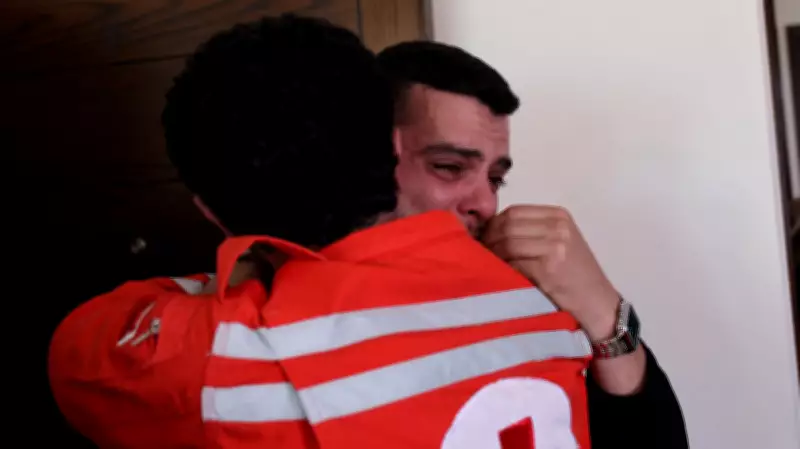
Footage shared by the Nabatiyeh Emergency Services with The Associated Press captured the harrowing scenes: medics in uniforms struggling to rescue colleagues from wrecked ambulances, only to be struck by another Israeli attack that shattered windows and caused further injuries. Hayya defended the decision to send multiple teams into danger, saying, "We went in three times because we refuse to leave our paramedics behind, even if it costs all of us our lives." He vowed that paramedic groups would continue their duties in southern Lebanon despite increasingly impossible conditions.
Broader Military and Political Context
Across southern Lebanon, Israeli forces reported striking over 200 Hezbollah targets in the past 24 hours, while Hezbollah claimed rocket attacks on military sites in northern Israel. Israeli Prime Minister Benjamin Netanyahu announced in a video address that he had ordered the military to expand its "buffer zone" in southern Lebanon, aiming to disarm Hezbollah and achieve a "sustainable peace" through negotiations with the Lebanese government.
In Lebanon, these talks have sparked backlash from Hezbollah and its allies. Hezbollah lawmaker Hassan Fadlallah criticized the government for engaging in "disgraceful" negotiations with Israel while it continues to kill Lebanese citizens. He called for a popular referendum on Hezbollah's arsenal, asserting that most Lebanese support the group's militant activities. Public opinion in Beirut is divided, with some residents advocating for military resistance and others viewing the talks as a potential path to end the war.
Humanitarian Crisis and Displacement
The Israeli military has issued evacuation warnings for large areas of southern Lebanon, but tens of thousands remain, either unwilling to leave their homes or lacking alternatives. Many displaced families seek refuge in the coastal city of Tyre, yet residents report that nowhere feels safe, with visible war damage including shattered buildings and debris-strewn streets across the region.