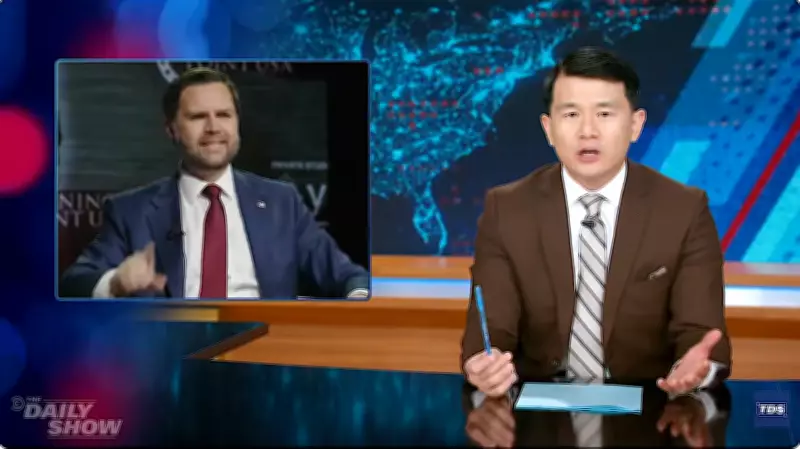
In a sharp critique, Daily Show correspondent Ronny Chieng targeted Vice President JD Vance's recent appeal to young voters who have grown disillusioned with the Trump administration's policies on the war in Iran. Speaking at a Turning Point USA gathering in Georgia on Tuesday, Vance addressed a sparse crowd with a message aimed at those who have distanced themselves from the Republican Party due to Middle East conflicts.
Vance's Plea for Engagement
Vance acknowledged the discontent among younger demographics, stating, "I recognize that a lot of young voters don't love the policy that we have in the Middle East, ok? I understand that." He urged them not to disengage over this single issue, instead encouraging greater involvement. "What I'm saying is don't get disengaged because you disagree with the administration on one topic. Get more involved. Make your voice heard even more. That's how we ultimately take the country back," Vance emphasized, framing it as a call to action.
Chieng's Satirical Take
Ronny Chieng, in his segment on Wednesday night's Daily Show, mocked the tone of Vance's speech, comparing it to a romantic comedy plea rather than a political address. "JD Vance managed to inspire the crowd with his stirring message of 'Please don't leave me,'" Chieng quipped, highlighting the perceived desperation in Vance's words.

Chieng then zeroed in on the irony of Vance's claim about needing to "take the country back," given the Republican Party's current dominance. "Yeah, that's right, JD. It's time to take the country back... from yourself?" he said sarcastically. "Like what are you talking about? Take it back from what? Republicans have everything. Republicans control Congress, the White House, the Supreme Court, old media, social media. You even took a Kennedy. I mean, you can keep him, but you still took him."
This commentary underscores the broader political tensions, as Vance's attempt to rally young voters faces scrutiny over policy disagreements and the party's entrenched power. The event highlights ongoing debates within the GOP and the challenges of appealing to a demographic increasingly critical of foreign policy decisions.