Iran Attacks Kuwaiti Oil Tanker Amid Escalating Conflict
The White House has threatened further escalation of its military campaign against Iran, which responded by attacking a Kuwaiti oil tanker near Dubai. This development comes as the war enters its fifth week, causing continued disruption to global markets with little relief in sight.
Trump's Threat to Critical Infrastructure
President Donald Trump stated in a social media post that if Tehran fails to reopen the Strait of Hormuz, the United States would "conclude our lovely 'stay' in Iran by blowing up and completely obliterating" electricity plants, oil facilities, and "possibly" desalination infrastructure. This threat to water facilities would constitute a war crime under the Geneva Conventions, adding a serious legal dimension to the escalating conflict.
Trump has regularly vacillated between suggesting a deal with Iran is imminent and warning that he's prepared to increase military pressure. This pattern of contradictory statements has created uncertainty about U.S. intentions and strategy in the region.

Conflicting Signals on Negotiations
According to reports, the president has told aides that he's willing to end the U.S. military campaign even if the Strait of Hormuz remains mostly closed. White House officials did not immediately respond to requests for comment on this development.
White House Press Secretary Karoline Leavitt stated that the U.S. is "conducting more intense, targeted strikes with devastating combat power with each passing day" and that American operations are proceeding "according to plan." She echoed the president's position that talks are on track, though the administration hasn't identified which Iranian officials it's dealing with, either directly or indirectly.
Despite the mystery surrounding peace talks, Leavitt claimed Iran is "increasingly eager" to negotiate and has agreed to "some of the points" proposed by the U.S. However, Iran has countered these claims, stating that talks aren't progressing and signaling it can continue fighting indefinitely.
Economic Impact and Regional Tensions
The conflict is threatening to cause significant economic damage worldwide, with the near-closing of the Hormuz waterway choking supplies of energy, fertilizer, and other critical commodities. The United Arab Emirates issued multiple alerts overnight, while Saudi Arabia and Kuwait reported interceptions of drones and missiles in their airspace.
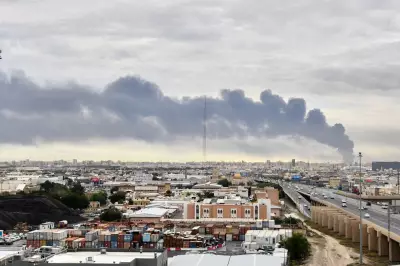
The Kuwaiti crude carrier Al-Salmi was attacked by Iran in an anchorage area of a Dubai port, according to Kuwait Petroleum Corporation. While there were no injuries reported among the crew, the assault may have resulted in an "oil spill in the surrounding waters," creating additional environmental concerns.
Market Reactions and Strategic Considerations
Oil prices pushed higher following the tanker strike, with West Texas Intermediate futures jumping almost 4% toward US$107 a barrel. The U.S. oil benchmark has surged almost 60% in March, representing the most significant increase since May 2020.
Exiting the conflict without a deal to resume the flow of oil through the Strait of Hormuz would represent a major loss for the United States. Washington is reportedly considering using diplomatic channels to pressure Iran to reopen the passage, or leaving it to allies in Europe and the Gulf region to negotiate a resolution.
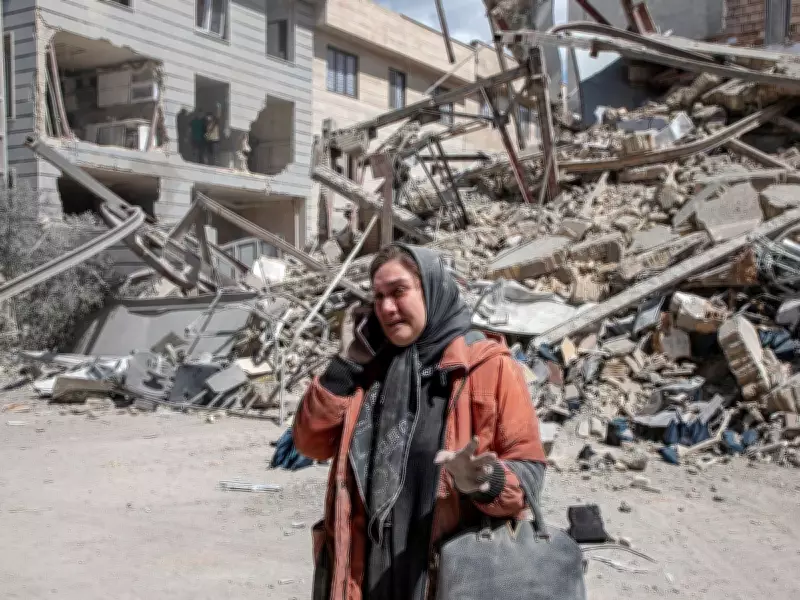
The back-and-forth on negotiations occurred as Israel and Iran exchanged missile strikes, further complicating the regional security landscape. The ongoing conflict demonstrates how localized tensions can quickly escalate into broader economic and security challenges with global implications.