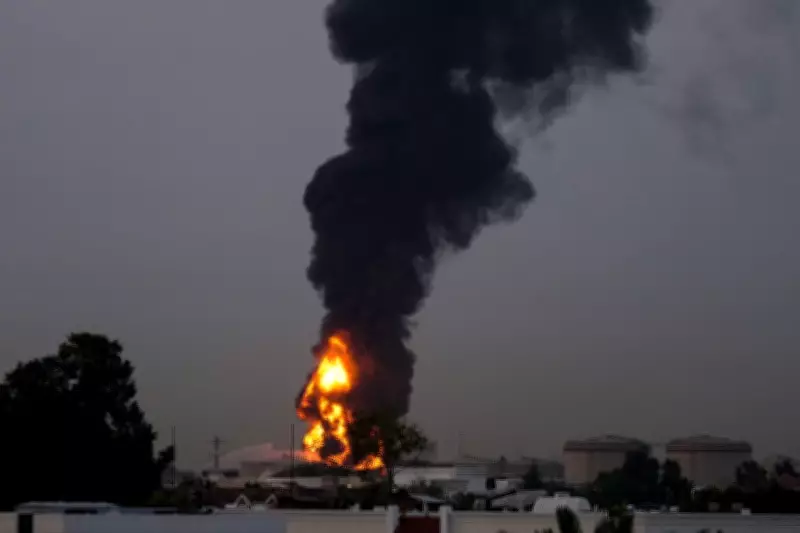
Iran Drone Strike Forces Temporary Closure of Dubai International Airport
A drone strike launched by Iran has compelled authorities to temporarily shut down Dubai International Airport, one of the world's busiest aviation hubs, causing significant travel disruptions. The incident, which occurred on March 16, 2026, has escalated tensions in the Middle East, with former U.S. President Donald Trump issuing a stark warning to allies who are hesitant to provide support.
Aviation Chaos and Global Repercussions
The closure of Dubai airport led to widespread flight cancellations and delays, affecting thousands of passengers globally. This disruption highlights the vulnerability of critical infrastructure in the region to geopolitical conflicts. Travelers, including a Canadian family residing in Qatar, faced severe inconveniences as airspace restrictions were imposed.
Experts suggest that Iran's actions may stem from a position of desperation, particularly as the closure of the Strait of Hormuz—a vital maritime chokepoint—continues to impact global shipping and energy supplies. The conflict has already disrupted international trade routes, with Canadian political figures like Carney meeting counterparts such as Starmer to discuss the implications for sovereignty and security.

Trump's Stern Warning to Allies
In response to the escalating situation, former President Trump threatened to "remember" those allies who refuse to assist in addressing the crisis. His comments underscore the complex diplomatic landscape, as nations grapple with how to respond to Iran's aggressive maneuvers. The unwillingness of Trump to negotiate a deal with Iran adds another layer of uncertainty to the conflict.
The fatal Israeli strikes in Lebanon have further inflamed tensions, contributing to the broader Iran war dynamics. These developments raise concerns about a potential regional escalation, with security analysts monitoring the situation closely.
Broader Context and Regional Stability
The drone strike and subsequent airport closure occur against a backdrop of ongoing Middle East instability. The incident not only disrupts travel but also signals Iran's capability to project power beyond its borders. As global leaders, including the Pope who criticized invoking God for war, call for restraint, the international community faces mounting pressure to de-escalate the conflict.
With Asian Football Confederation confirming Iran's participation in the upcoming World Cup, the intertwining of sports and politics adds a unique dimension to the crisis. Meanwhile, economic indicators, such as a drop in Canadian inflation, are overshadowed by the geopolitical turmoil affecting markets and trade.
The temporary closure of Dubai airport serves as a stark reminder of how regional conflicts can have immediate and far-reaching consequences on global connectivity and security.