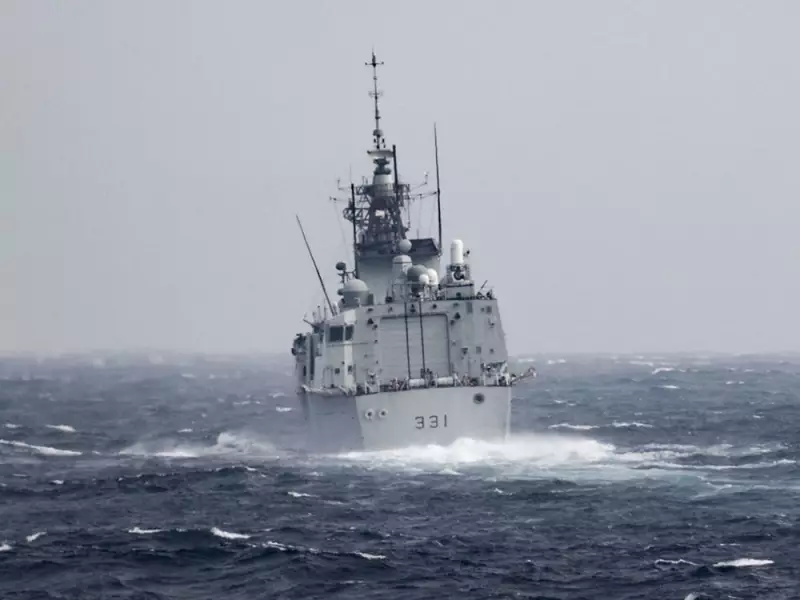
In a significant escalation of diplomatic tensions, the Islamic Republic of Iran has formally designated the Royal Canadian Navy as a terrorist organization. The move, announced on December 30, 2025, is described by Tehran as an act of 'reciprocity' following Canada's own decision to list Iran's Islamic Revolutionary Guard Corps (IRGC) as a terrorist entity in 2024.
The Framework of Retaliation
Iran's foreign ministry explicitly stated its decision was made 'within the framework of reciprocity'. This action directly responds to Ottawa's move eighteen months prior, which Iran claims is 'contrary to the fundamental principles of international law'.
The legal basis cited by Iran is a piece of domestic legislation enacted in 2019. This law empowers the country to apply the terrorist designation to any nation that supports or complies with the United States' decision to declare the IRGC a terrorist organization. The U.S. made that initial designation under President Donald Trump in April 2019.

Background: Canada's Designation of the IRGC
Canada's decision to list the IRGC as a terrorist organization was announced in June 2024 by Public Safety Minister Dominic LeBlanc. He stated the government acted after a deliberative process based on 'very, very strong and compelling evidence'.
The IRGC, formed after Iran's 1979 revolution, is a powerful military, economic, and political force with over 150,000 members. It controls vast business interests and oversees Iran's missile and nuclear programs. A key branch, the Quds Force, was listed by Canada as a terrorist entity back in 2012 for providing support to groups like Hamas and Hezbollah.
A pivotal factor behind Canada's 2024 designation was the IRGC's admission of responsibility for shooting down Ukraine International Airlines Flight PS752 in January 2020. The tragedy killed all 176 people on board, including 85 Canadian citizens and permanent residents.
Implications and Regional Context
This tit-for-tat labeling marks a new low in Canada-Iran relations. While largely symbolic, Iran's designation of a branch of the Canadian Armed Forces as terrorist represents a sharp rhetorical escalation. It formalizes a hostile stance and complicates any potential for diplomatic engagement in the future.
The move also occurs within a broader regional context of heightened tensions. Iran's statement reinforces its position against Western policies it deems antagonistic, using legalistic language from its own parliamentary system to justify the retaliatory measure.
For Canada, the designation underscores the ongoing challenges in holding the Iranian regime accountable for actions like the downing of Flight PS752, while navigating the complex repercussions of such foreign policy decisions. The Canadian government had previously resisted calls to list the IRGC for years, citing concerns over unintended consequences for ordinary Iranians.