Former CIA Director Applauds Carney's Davos Address as a 'Service' to Global Dialogue
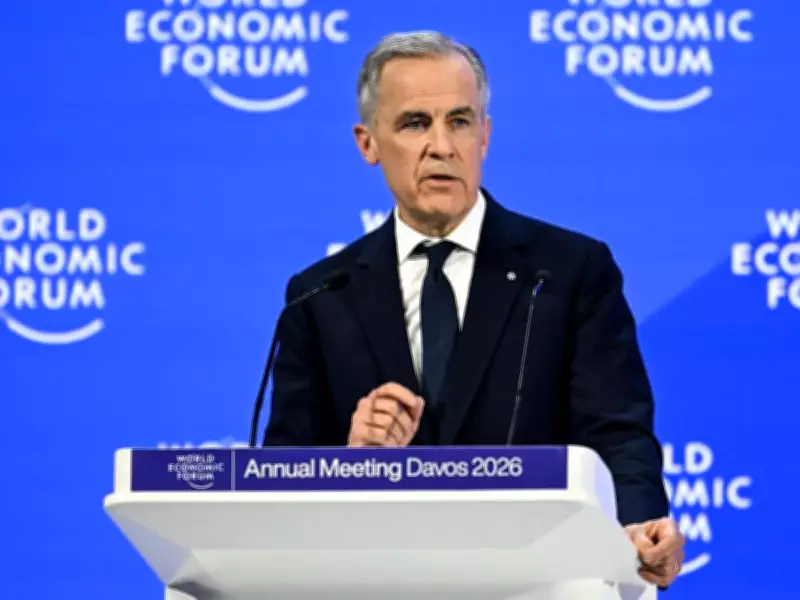
In a recent exclusive interview, former CIA deputy director and acting director John McLaughlin offered a compelling analysis of global security dynamics, highlighting the significance of Prime Minister Mark Carney's recent speech at the World Economic Forum in Davos. McLaughlin, currently a professor of practice at the Johns Hopkins School of Advanced International Studies, described Carney's address as performing a crucial 'service' by presenting the world's challenges in 'stark' and unambiguous terms.
Davos Address Sparks International Response
The former intelligence official's comments come amid a flurry of diplomatic activity following Carney's powerful January 2026 Davos presentation. European leaders have reportedly crafted responses addressing Carney's call for a stronger, more independent Europe, while U.S. Secretary of State Marco Rubio delivered a surprisingly conciliatory speech at the Munich Security Conference around the same period.
McLaughlin, who attended the Munich conference, provided unique insights into how allied nations perceive America's evolving global role and the critical importance of maintaining robust intelligence partnerships despite political tensions.

U.S.-Canada Intelligence Cooperation: The 'Lifeline' of North American Security
When questioned about the future of U.S.-Canada security cooperation, McLaughlin emphasized the fundamental importance of this relationship to American national security. "U.S.-Canadian ties are, I think, at the heart of American security," he stated, while acknowledging current diplomatic strains between the two nations.
The former CIA director highlighted Canada's membership in the Five Eyes intelligence alliance as particularly crucial, describing it as "the core of American intelligence cooperation" with Commonwealth partners. This security grouping, which includes the United States, United Kingdom, Canada, Australia, and New Zealand, represents what McLaughlin considers vital to American security infrastructure.
Intelligence Partnerships Transcend Political Tensions
Drawing from his extensive experience working with international intelligence services, McLaughlin explained that intelligence cooperation among allies typically continues uninterrupted even when diplomatic relationships face strain. "Based on my experience in working with intelligence services, I would say that even when international relationships are strained at the diplomatic or political level, intelligence cooperation among allies tends to go forward without significant friction or interruption," he noted.
This phenomenon, according to McLaughlin, occurs because intelligence liaison relationships operate "below the level of public controversy and scrutiny," allowing them to maintain stability in national security matters despite political disagreements. He cited the Iraq War as a historical example, when many European nations opposed U.S. actions politically but continued intelligence collaboration on shared concerns like terrorism.
"I would like to think that the intelligence ties between Canada and the United States will remain a lifeline that keeps things close on national security, even if political tensions and diplomatic tensions persist for understandable reasons," McLaughlin concluded optimistically.
Addressing Concerns About U.S. Expansionist Rhetoric
When questioned about recent U.S. actions in Venezuela, threats against Greenland, and President Trump's references to Canada as a potential "51st state," McLaughlin offered measured assessments. While acknowledging that 31 percent of Canadians reportedly believe the U.S. could one day invade their country, the former intelligence director dismissed the likelihood of such scenarios.
"I do not take the threat of a U.S. attack on Canada, or some effort forcibly to integrate Canada into the United States, seriously," McLaughlin stated. "I suspect President Trump means it at some level, but I can't imagine that actually happening."

Regarding Greenland, McLaughlin took a more nuanced position: "I take seriously that President Trump and a good part of his administration strongly desire, at minimum, increased influence and, at maximum, actual possession of Greenland. In other words, I'm saying I think they were advancing the idea seriously. However, I don't think they will get what they're looking for."
The Enduring Value of Intelligence Relationships
Throughout the interview, McLaughlin consistently emphasized how intelligence partnerships provide stability during periods of political uncertainty. His perspective suggests that while diplomatic relations between the U.S. and Canada may experience fluctuations, the underlying intelligence cooperation that forms the bedrock of North American security remains resilient and essential.
The former CIA director's analysis provides valuable context for understanding how global security relationships function beneath the surface of public political discourse, particularly in an era marked by shifting alliances and evolving international dynamics.