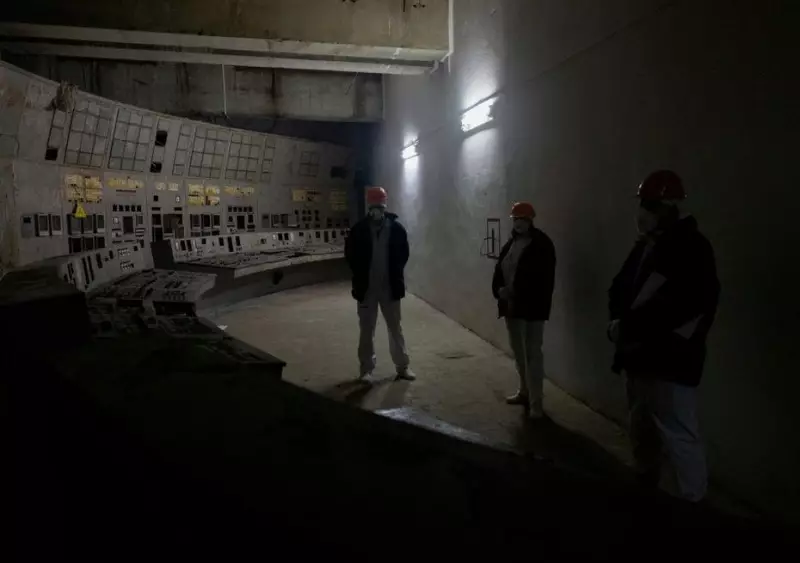
Deep within the abandoned control room of Ukraine's Chernobyl nuclear power plant, a worker stares at a wall of silent dials and screens—a haunting monument to the world's worst nuclear accident. Today, the specter of another catastrophe looms, not from reactor failure, but from the ongoing war with Russia.
A Fragile Barrier Against a New Disaster
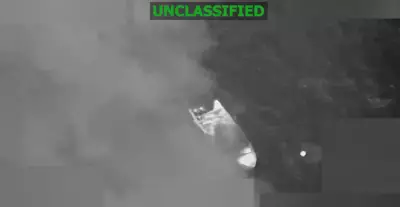
The 1986 meltdown at Chernobyl left a legacy of radiation that required immense engineering to contain. That containment is now critically compromised. In February, a Russian drone struck the New Safe Confinement (NSC), the massive outer shell built to encase the radioactive ruins, punching a large hole in its structure.
Plant director Sergiy Tarakanov, in an interview with AFP from Kyiv, delivered a grave assessment. He stated that ten months later, repairs are ongoing, and it could take three to four more years before the outer dome fully regains its primary safety functions. "It does not perform the function of retaining radioactive substances inside," Tarakanov confirmed, echoing alarms raised by the International Atomic Energy Agency (IAEA).

The strike has cast doubt on whether the structure will last its intended 100-year lifespan. AFP journalists visiting the site this summer saw the gaping crater, now covered with a protective screen, and charred debris from the attack still on the floor as of December. Furthermore, some 300 smaller holes made by firefighters battling the ensuing blaze remain unsealed.
The Lingering Threat of Military Action
Russia's army seized the Chernobyl facility on the first day of its full-scale invasion in February 2022, holding it for several weeks before withdrawing. Since then, Ukraine has consistently accused Moscow of targeting its nuclear infrastructure, arguing that such strikes risk triggering a catastrophe with global consequences.
Tarakanov identified military action as the "main threat." The vulnerability was highlighted again in October when a Russian strike on a nearby substation cut power to the confinement structure. Ukraine has been forced to regularly reduce power at its nuclear plants following attacks on the national energy grid.
Despite the physical damage and power disruptions, officials report that radiation levels at the site have remained stable and within normal limits. In a modern control room, engineer Ivan Tykhonenko continuously monitors 19 sensors, keeping a vigilant watch over the precarious site.
A Race Against Time and Conflict
Inside the NSC, a forest of scaffolding now rises to the 100-metre-high ceiling, a testament to the monumental repair effort underway. The NSC is the high-tech replacement for the original, hastily built Sarcophagus. Its integrity is paramount.
The director's warning is stark: another direct hit—or even a powerful nearby explosion—could cause the inner radiation containment shell to collapse. This scenario would re-release radioactive material trapped since the 1986 disaster, creating a new environmental and humanitarian emergency amid the war.
For now, the work continues under the shadow of conflict. The damaged shield at Chernobyl stands as a powerful symbol of how warfare can resurrect old dangers, turning a sealed tomb of the past into a potential source of future peril for Ukraine and beyond.