

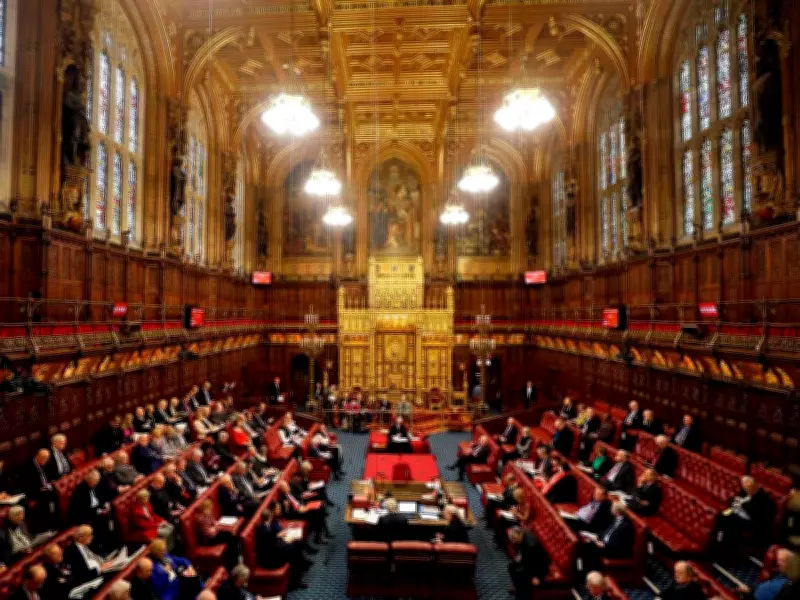
The End of an Era: UK House of Lords Votes Out Hereditary Peers
In a historic move that marks the culmination of a quarter-century of reform, the United Kingdom's House of Lords has voted to eject the last remaining purely hereditary peers from the chamber. This decision, finalized on Tuesday, effectively transforms the upper house into a body more closely resembling appointed legislative bodies like the Canadian Senate, ending nearly a millennium of tradition where birthright guaranteed a seat in Parliament.
From Blair's Reforms to Starmer's Final Push
The reforms that led to this moment began under former Prime Minister Tony Blair in 1999, who initiated what were described as "sorta-kinda-democratizing" changes to the Lords. Blair's compromise allowed for 92 voting hereditary peers to remain, selected through internal elections within the chamber itself. Now, under Prime Minister Keir Starmer's Labour government, new legislation has passed that removes even these elected hereditary representatives.
The House of Lords (Hereditary Peers) Act, which passed the Commons in late 2024, received its final approval this week when amendments proposing to allow elected hereditary peers to retain their privileges for their lifetimes were defeated by a decisive vote of 336 to 77. Only a handful of "hybrid" peers who receive meritorious life peerages in addition to their hereditary titles will remain.

A Chamber Transformed: What Remains in the Lords
With this change, the composition of the House of Lords now consists primarily of approximately 750 life peers appointed by successive governments since the life peerage system was established in 1958. The Lords Spiritual—bishops of the Church of England—also retain their seats for the time being. Notably, the removal of the elected hereditary peers means there is now no elected element whatsoever in the upper chamber, a paradoxical outcome for a reform intended to increase democratic legitimacy.
Conservative life peer Lord Moore of Etchingham (better known as journalist Charles Moore) articulated a compelling perspective during Tuesday's debate. He suggested that when members of the Lords feel their legitimacy is questioned, they tend to behave better precisely because they are uncertain about their right to be there. Moore noted that public dissatisfaction with the House of Lords was "incredibly rare" in the latter half of the 20th century but has grown "more and more contested" since Blair's initial reforms.
Historical Context and Canadian Parallels
The elimination of hereditary peers represents the latest chapter in Britain's gradual constitutional evolution. For centuries, the House of Lords operated as a bastion of aristocratic privilege where titles passed from generation to generation. The pre-1958 peerage was often criticized for including "the senile and the daft," but the Blair compromise created a situation where voting hereditary peers had to win elections and earn the respect of their colleagues.
Interestingly, this development invites direct comparison to Canada's Senate, another appointed upper chamber that has undergone its own reform struggles. As the article notes, most readers will be familiar with "how experiments with Senate elections in Canada have fared," suggesting that Britain's path forward may encounter similar challenges.
The Road Ahead: Uncertain Future for Lords Reform
The Labour government has expressed long-term ambitions to create a popularly elected upper house, potentially even renaming it the Senate. However, significant political and constitutional hurdles remain. Any rebalancing that affects the primacy of the elected House of Commons would prove far more complex than simply removing hereditary peers.
Moreover, there are serious questions about whether Labour will maintain power long enough to implement such sweeping changes. The current reform has proceeded with little controversy, even among the displaced hereditary peers themselves, but future attempts to alter the fundamental nature of the upper chamber may provoke greater resistance.

As Britain navigates this constitutional transition, observers will watch closely to see whether removing the last vestiges of hereditary privilege actually improves governance or simply creates new forms of democratic deficit. The centuries-old tradition of hereditary peers has ended, but the debate about what should replace it is only beginning.





