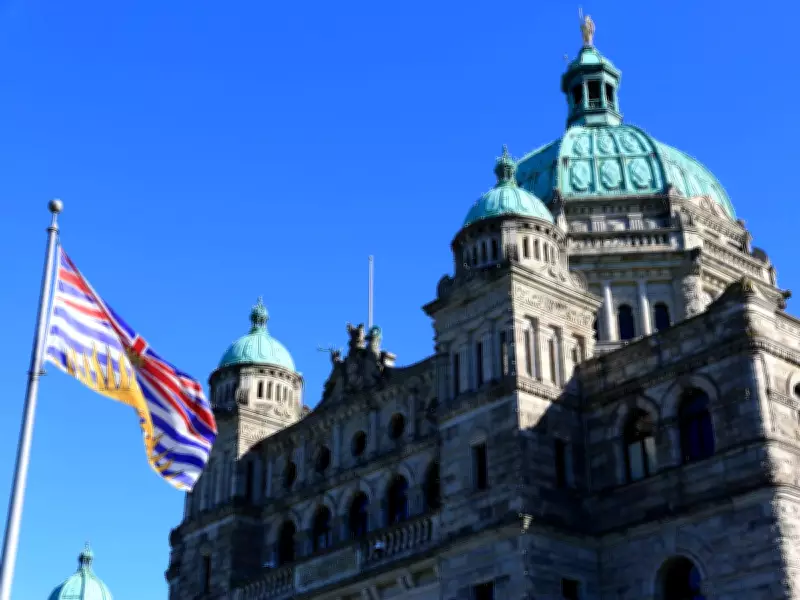
In 2019, as a member of the legislative assembly of British Columbia, I voted for the Declaration on the Rights of Indigenous Peoples Act (DRIPA). DRIPA was intended as a framework to advance reconciliation like never before; a pathway for all British Columbians to walk hand-in-hand down a path toward meaningful reconciliation.
I was taught by Manny Jules, the former chief of the Tkʼemlúps te Secwépemc in my hometown of Kamloops, that reconciliation is two partners walking a path together side by side. One side cannot get too far ahead of the other, because when that happens, things break down.
Unfortunately, that is where we are now as a province — a breakdown. What we were promised would never happen back in 2019 has happened. Questioned by my colleagues in the opposition in 2019, then-Indigenous relations minister Scott Fraser answered definitively, “I just want to be clear: Bill 41 does not bring UNDRIP into legal force and effect.”

It is now clear that the courts disagree with the government’s stated view of DRIPA’s intent and effect. While it is worth understanding how British Columbia got itself into this situation, finger-pointing and partisan criticism do not adequately address the province’s residents and business community, who are rightly concerned about the precedent we have set.
Impact on Mineral Exploration
Members of the Association for Mineral Exploration (AME), which is largely made up of individuals and family businesses with dreams of driving B.C.’s mineral exploration sector forward, have faced head-on the confusion caused by the 2025 B.C. Court of Appeal ruling in Gitxaala v. British Columbia, which effectively applied DRIPA to all B.C. law.
These are business leaders who want nothing more than to hike along a ridgeline with a rock hammer, looking for mineralization. Instead, these businesses are confronting the realities of uncertainty and regulatory unpredictability caused by this situation, and they are seeing their livelihoods disappear.
AME has not yet called for repeal. After expectations have been set with Indigenous communities and the government has made a commitment, a path forward is required. However, the economic uncertainty that exists cannot be overlooked or overstated.
National Security Concerns
For example, B.C. metals are a national priority due to the renewed importance of identifying and developing critical minerals for defence and economic sovereignty. Canada’s national security depends on access to critical metals and that starts with AME member companies being able to do their jobs. Without these metals, Canada is weaker and more reliant on countries that do not care about our interests.
Proposed Amendments
This is why substantive amendments to DRIPA are urgently needed, and right now, transparency is more important than ever. In our letter to the premier dated Jan. 13, 2026, we outlined four specific amendments, and we have spent the past few months talking about them publicly.
AME called on the government to delete the section of the Interpretation Act that was amended by the then-attorney general David Eby in 2021, which effectively ensured that the declaration would be applied to all existing laws and regulations and to any court’s legal interpretation moving forward.
B.C. does not need to choose between reconciliation and economic prosperity. With thoughtful amendments, DRIPA can be fixed to achieve both goals.