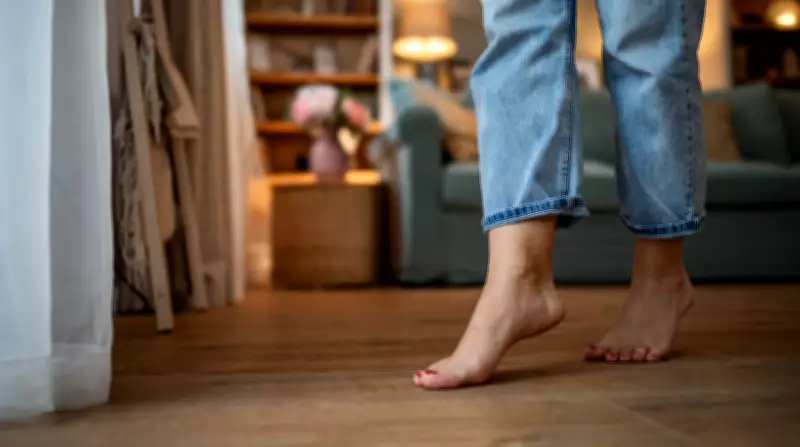
When you walk in the door and kick off your shoes, does it actually hurt the health of your feet to walk around barefoot on hard floors? It is not the most comfortable feeling, but doctors say there can be some benefits, with a few caveats.
What Does Barefoot Mean?
According to the Cambridge Dictionary and experts ranging from podiatrists to dermatologists, walking barefoot means having no shoes or socks on. Dr. Robert Conenello, a licensed clinical podiatrist, explains, “Barefoot is skin to ground. Anything else is considered to be shod, as even socks alter the mechanics of movement.”
Benefits of Going Barefoot at Home
Conenello is a big advocate for going barefoot at home. He states that the practice increases intrinsic muscular strength within the feet. The primary benefit is the reinforcement of foot muscles, which tend to weaken as we age and wear shoes. These muscles are closely linked to overall mobility, so their deterioration can contribute to reduced movement. “Many of the pathologies that I see in my practice are due to the inability to engage these muscles for normal movements and metabolic efficiency,” he adds.

Dr. Hannah Kopelman, a dermatologist, agrees and notes that going barefoot at home allows your skin to breathe, which can help prevent moisture buildup and reduce the risk of fungal infections like athlete’s foot. She also highlights a secondary advantage: sensory stimulation and overall wellness. “Feeling the texture of different surfaces underfoot can be grounding and relaxing, almost like a mini reflexology session,” she says. For those without underlying skin or foot conditions, this can be a natural way to connect with your environment and promote mindfulness.
In short, opting to go shoeless and sockless in a clean home helps fortify your feet, providing long-term rewards while reducing the risk of skin conditions. It also offers a kind of natural massage, which can be surprisingly relaxing.
Potential Downsides
One potential downside is increased exposure to irritants or allergens on the floor, such as dust, pet dander, or cleaning chemicals. For individuals with sensitive skin or chronic conditions like contact dermatitis or eczema, this could be a significant concern. Conenello acknowledges similar risks, such as stepping on pathogens like fungi in moist environments, but emphasizes that proper hygiene can help mitigate these risks. He advises washing feet frequently, drying them thoroughly, and moisturizing.
Other painful risks include slipping on slick or wet surfaces, or stepping on something hard and sharp that could cause injury. Kopelman points out that individuals with diabetes or poor circulation are more vulnerable to severe consequences, as even a minor foot injury can lead to serious health issues.
While walking barefoot can help strengthen muscles, repeated practice on hard surfaces could potentially lead to foot fatigue or plantar fasciitis. “Over time, the lack of cushioning can put stress on the joints, especially in those who already have foot or joint issues,” she explains.
When to Wear Shoes or Socks
Though Conenello is generally a proponent of going barefoot, he advises wearing foot support when engaging in tasks that involve standing for extended periods, such as cooking. “When standing for long periods barefoot, there can be excessive load to one area of the foot,” he says. Even professional cooks usually benefit from a shoe that allows them to balance weight over their entire foot.
There is a middle ground: socks. According to Conenello, there is nothing wrong with wearing socks, but they will decrease the benefits associated with being barefoot. “There is now a filter between the ground and the foot,” he says. Kopelman adds that socks offer minimal protection from minor abrasions or allergens while still allowing feet to feel relatively free, and minimize direct contact with surfaces that may harbor bacteria or irritants.

Conclusion: Moderation Is Key
Taking all the pros and cons into account, walking barefoot at home, especially on clean and well-maintained floors, is not only safe but generally healthy, unless you are dealing with a skin condition like psoriasis, eczema, or athlete’s foot that could be exacerbated by bacteria. Likewise, individuals with diabetes, neuropathy, or poor circulation should avoid barefoot walking due to the increased risk of unnoticed injuries or infections. Going barefoot selectively seems to be the best option. Moderation is indeed key.