

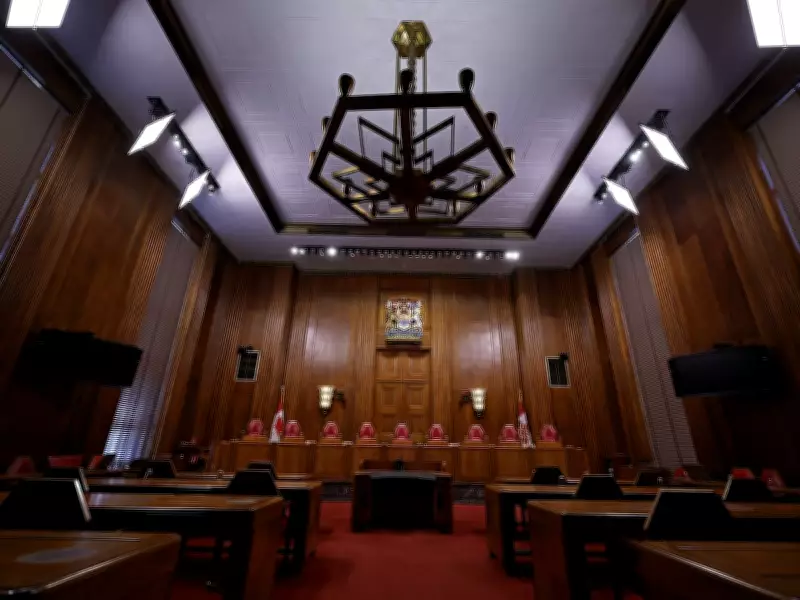
Scholar Advocates for Judicial Dismissal Over Section 33 Limits, Highlights Democratic Concerns
In a provocative stance, legal scholar Yuan Yi Zhu has called for the dismissal of any Supreme Court judge who attempts to impose restrictions on Section 33 of the Canadian Charter of Rights and Freedoms, commonly known as the notwithstanding clause. Zhu emphasizes that altering the constitution without democratic consent poses a severe threat to the nation's governance and unity.
Quebec Secularism Law at the Heart of the Debate
This controversy arises as the Supreme Court recently heard oral arguments challenging Quebec's secularism law, which imposes various restrictions on public religious practices in the name of secularism. The Quebec legislature invoked Section 33 to shield the law from constitutional challenges, a move upheld by the Quebec Court of Appeal. Critics, backed by the federal government and numerous non-governmental organizations, have escalated the case to the Supreme Court, aiming not only to overturn the law but also to establish limits on the use of the notwithstanding clause.
Broad Support and Potential Consequences
Zhu points out that the secularism law enjoys widespread popular support in Quebec, where the notwithstanding clause is viewed as a necessary tool to override a bill of rights that many in the province consider illegitimate. He warns that any Supreme Court action against Section 33 could trigger a constitutional crisis, potentially leading to the country's fragmentation. "The law enjoys broad popular support in Quebec, and the notwithstanding clause has long been viewed as a necessary override," Zhu notes, adding that such a move might mark the beginning of Canada's breakup.

Historical Context and Legal Arguments
The text of Section 33 has remained unchanged since its inception, and the Supreme Court previously affirmed in the 1988 case Ford v. Quebec (Attorney General) that there are no inherent limits to its invocation beyond the requirement for legislative renewal every five years. Zhu argues that the current push to restrict Section 33 represents an attempt to amend the constitution without democratic approval, relitigating the 1982 battle between Prime Minister Pierre Trudeau and provincial premiers who insisted on preserving legislative prerogatives through the override clause.
Critics' Hypotheticals and Judicial Overreach
During the Supreme Court hearings, critics employed extreme hypotheticals, such as the possibility of legislators introducing slavery, to challenge the constitutionality of Section 33. However, Zhu dismisses these arguments as unrealistic, noting that a legislature willing to enact such measures would unlikely be constrained by legal documents. He also highlights instances of judicial overreach, such as the Supreme Court's past rulings on mandatory minimum sentences for child pornography, where hypothetical scenarios influenced decisions.
In summary, Yuan Yi Zhu's call to action underscores a deep-seated concern over judicial interference with democratic processes. As the Supreme Court deliberates on the Quebec secularism law, the outcome could have far-reaching implications for constitutional law, national unity, and the balance of power between elected officials and the judiciary in Canada.






