

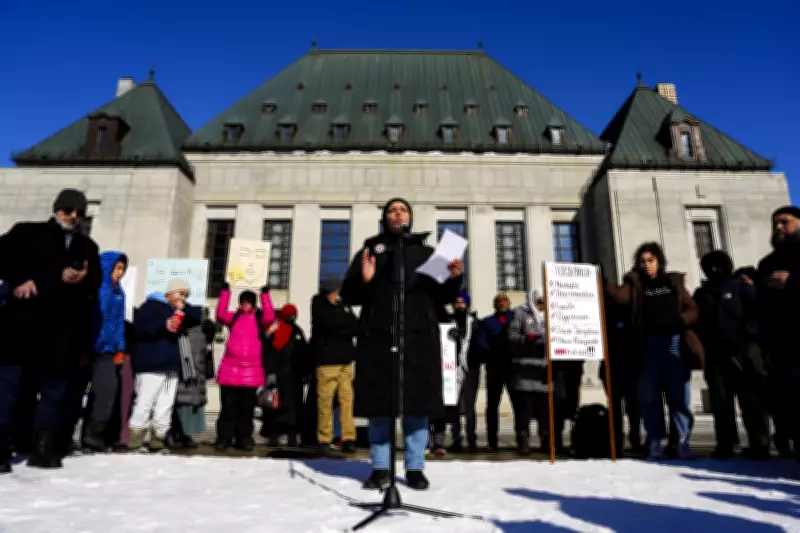
Lawyers for the Quebec government presented arguments before the Supreme Court of Canada on Monday, March 23, 2026, asserting that Bill 21, the province's controversial secularism law, is a legitimate and constitutional exercise of provincial powers. The hearing, which has drawn national attention, saw demonstrators congregating outside the courthouse in Ottawa as the legal battle over the law's validity intensified.
Core Arguments in Defense of Provincial Authority
In their submission to the court, Quebec's legal team emphasized that Bill 21 falls within the province's jurisdiction over matters of public order and secularism. They contended that the law, which prohibits certain public sector employees in positions of authority from wearing religious symbols while on duty, is a reasonable measure to uphold state neutrality. The lawyers argued that this approach aligns with Quebec's distinct cultural and historical context, where secularism is viewed as a fundamental societal value.
Constitutional Challenges and Public Reaction
The appeals before the Supreme Court stem from lower court rulings that had partially struck down provisions of Bill 21, citing conflicts with the Canadian Charter of Rights and Freedoms. Opponents of the law, including civil liberties groups and religious organizations, have criticized it as discriminatory and a violation of fundamental freedoms. The protests outside the Supreme Court highlighted the deep divisions the issue has sparked, with activists holding signs and chanting slogans calling for the law's repeal.

Historical Context and Legal Precedents
Bill 21, formally known as the Act respecting the laicity of the State, was passed by the Quebec National Assembly in 2019. It invokes the notwithstanding clause, allowing the province to override certain Charter rights for a limited period. Quebec's lawyers referenced past Supreme Court decisions that have acknowledged provincial autonomy in areas like education and language, suggesting similar deference should apply to secularism policies.
Implications for Federal-Provincial Relations
The case has broader implications for the balance of power between federal and provincial governments in Canada. A ruling in favor of Quebec could reinforce provincial authority in shaping social policies, while a decision against it might strengthen federal oversight of Charter rights. Legal experts note that the outcome could set a precedent for how other provinces approach similar issues in the future.
Public opinion in Quebec remains divided, with polls showing significant support for the law within the province, but opposition elsewhere in Canada. The Supreme Court's decision, expected later in 2026, will likely have lasting impacts on religious freedom, multiculturalism, and the legal framework governing state neutrality across the country.






