

Politicians Capitalize on Shrinking Attention Spans to Shape Public Opinion
In an era where digital distractions are rampant, our collective attention spans have dramatically declined, creating a fertile ground for political manipulation. A recent viral TikTok video by content creator Elizabeth Houlihan, known online as @mamahouli, highlights how politicians across the spectrum are exploiting this cognitive shift to sway voters with concise, often misleading sound bites.
The Alarming Decline in Focus
Houlihan references a 2004 study from the University of California, Irvine, which found that the average attention span on screens was approximately two and a half minutes. By 2012, this had dwindled to 75 seconds. Over the past decade, the situation has worsened significantly, with the average attention span now plummeting to a mere 47 seconds, and the median hovering around 40 seconds.
"That means, I’m about halfway through your attention span right now," Houlihan remarked in her clip, emphasizing how quickly viewers disengage. This rapid decline has profound implications for how information is consumed and processed in the political arena.

Political Exploitation Through Short Clips
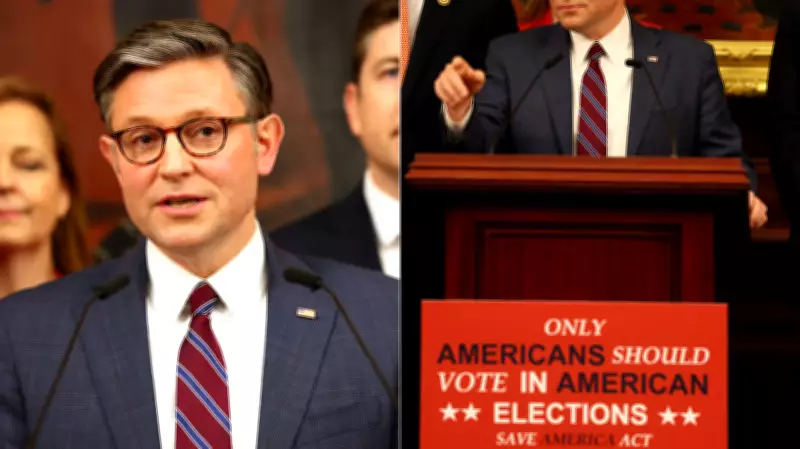
Houlihan points to specific examples, such as the Republican-backed SAVE Act, a voter ID proposal supported by former President Donald Trump. Critics argue it could reduce voter participation, particularly among communities of color. Politicians often simplify the message, stating that 84% of Americans agree with showing ID to vote, based on a Pew Research Center poll. However, they may conflate this with support for the broader SAVE Act, which includes more contentious provisions.
"Bad actors in American politics are taking advantage of this flaw in the American consciousness to give you short digestible clips of information," Houlihan explained. Providing full context—such as discussing the rarity of in-person voter fraud, the challenges for elderly or low-income voters without photo ID, or the hurdles for married women who changed their names—would exceed the typical 40-second attention span, making it less likely to be absorbed by the public.
Voter Fatigue and Cognitive Shortcuts
Dona-Gene Barton, an associate professor of political science at the University of Nebraska–Lincoln, notes that many voters are both unable and unwilling to process extensive political news. When topics become cognitively demanding, they resort to shortcuts, relying on trusted political elites to condense information. Barton's research on the 2016 election revealed that an overload of election news can cause people, especially Democrats, to tune out political coverage entirely.
"It’s easier for voters to turn to trusted political elites to condense the information for them," Barton told HuffPost. This dynamic leads to the proliferation of sound bites, such as Sen. Bernie Sanders' "Medicare for all" slogan, which simplify complex policies into memorable phrases. Barton adds that all politicians engage in this practice, framing issues like ICE activity or Medicaid in polarized terms to appeal to their bases.
A Rational Response to the Information Environment
Todd Belt, a professor and political management program director at George Washington University, argues that politicians are responding rationally to the current media landscape rather than acting nefariously. He draws a parallel to the 1980s, when broadcast news became profit-driven, reducing the average speaking time for presidential candidates from 43 seconds to 9 seconds, prompting the rise of short slogans.
"I think this is politicians responding to the information environment in a way that is rational, rather than engaging in some sort of trickery or acting in a nefarious way," Belt stated. Today, this trend has migrated to social media platforms like TikTok, where content is often consumed at accelerated speeds, such as 1.5x or 2x, further compressing information delivery.

Strategies to Combat Sound Bite Influence
To avoid being swayed by context-light clips, Houlihan advocates for expanding attention spans through deeper engagement with nuanced concepts. "Without learning to digest nuanced concepts and ideas, you are going to be tricked by bad actors who act in bad faith to serve their own interests against the better interests of the American people," she warned.
Belt concurs, urging Americans to read more to gain context and nuance missing from brief videos. Barton recommends occasionally tuning into opposing cable news networks to understand different perspectives. "Listening to sources from both sides of the political aisle can help combat some of this," she advised, noting that voters often focus on the messenger rather than policy details.
As attention spans continue to shrink, the challenge for the public is to seek out comprehensive information and resist the allure of oversimplified political messaging that dominates today's fast-paced digital culture.





