

Readers Decry Scapegoating of Minorities and MAID Restrictions in Alberta
In a series of letters published in the Edmonton Journal, readers have voiced strong criticism against the Alberta government's approach to immigration and medical assistance in dying (MAID) legislation. The correspondence highlights growing concerns over policies that target minority communities and restrict personal freedoms.
Scapegoating Minorities Called "Cowardly and Dangerous"
One letter from Lori Dexter of Edmonton responds to recent opinion pieces about immigration policy, specifically addressing what the writer describes as "the attempt of the Smith government to gain political points to the detriment of minority communities." Dexter argues that scapegoating represents a "cowardly, unintelligent, and dangerous reaction to the social problems we face."
The letter references former European Union president Donald Tusk's 2019 address to the United Nations General Assembly, where he warned about how easily "love of one's homeland" can transform into "hatred towards one's neighbours" and how pride in one's culture can become "contempt for the culture of strangers."

"What we need and expect from our government are creative, collaborative, and caring approaches to these complex problems," Dexter writes, emphasizing that simplistic blame-shifting fails to address substantive issues facing Alberta communities.
UCP's MAID Legislation Faces Multiple Criticisms
Separate letters address the United Conservative Party's proposed changes to medical assistance in dying legislation. Joan Laurie of Edmonton contends that "the UCP is once again proposing a solution to a problem that doesn't exist" with its MAID bill.
Laurie argues the government should instead focus on "health care, education and the economy"—issues that polls indicate matter most to Albertans. The letter lists several UCP initiatives that allegedly lack public support, including changing MAID eligibility, separation from Canada, dropping the Canada Pension Plan, replacing the RCMP, allowing coal mining in the Rockies, and increasing funding for private education and health delivery.
The proposed MAID legislation would eliminate advance directives as eligibility criteria, which Laurie describes as particularly concerning for those with loved ones suffering from dementia. "Anyone who loves someone whose life has been completely diminished by dementia would never restrict any person's right to declare in advance that they do not want a fog-like existence," the letter states.
Personal Freedom Concerns Highlighted
Keith Cummings of Telkwa, British Columbia, addresses Premier Danielle Smith's threat to use the notwithstanding clause if her MAID bill faces legal challenges. "I would like to make my end-of-life decision at a time of my choice, thank you, not Ms. Smith's," Cummings writes.
The letter characterizes the proposed MAID restrictions as compromising personal choice rather than expanding freedoms. "This is not democracy, this is not freedom, this is not Canadian," Cummings asserts, framing the issue as one of fundamental rights versus government overreach.
Laurie's letter echoes this sentiment, noting the irony that "for a party that purportedly favours personal freedom, it is ironic that they plan to take freedom away from people who want to manage how their lives will be lived." The writer describes the proposed changes as potentially forcing people "to linger in the limbo of loss, alive but not living," calling this approach "not only misguided, it is cruel."
Broader Pattern of Controversial Policies
The letters collectively suggest a pattern of UCP policies that prioritize controversial initiatives over issues with broader public support. Laurie's letter specifically questions why the government spends "time, money and attention" on matters that polls indicate most Albertans don't support, while seemingly neglecting more pressing concerns.
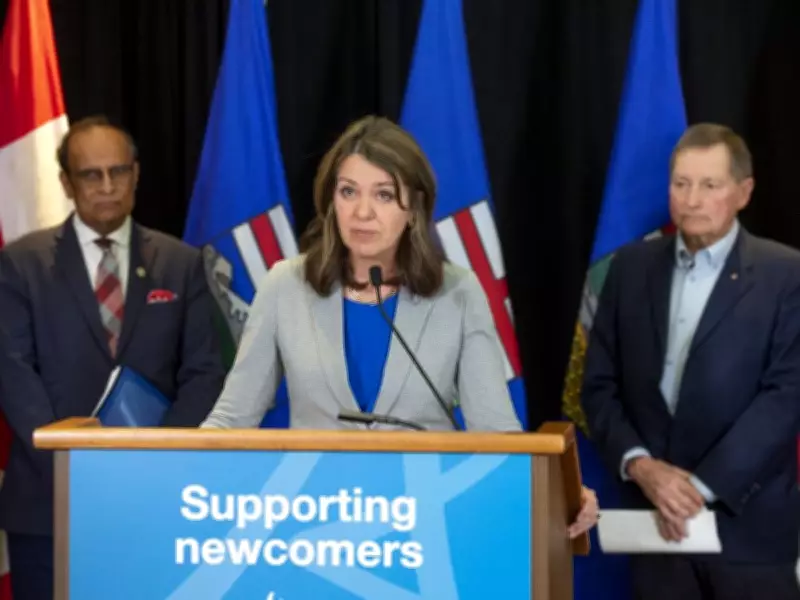
These criticisms emerge amid ongoing debates about immigration policy in Alberta, including discussions about Ukrainian evacuees and federal caps on temporary residents that have involved Premier Danielle Smith, Minister for Immigration and Multiculturalism Muhammad Yaseen, and former Alberta Premier Ed Stelmach.

The Edmonton Journal continues to invite letters to the editor, requesting submissions of no more than 150 words that include full names, addresses, and daytime telephone numbers for verification purposes.





