

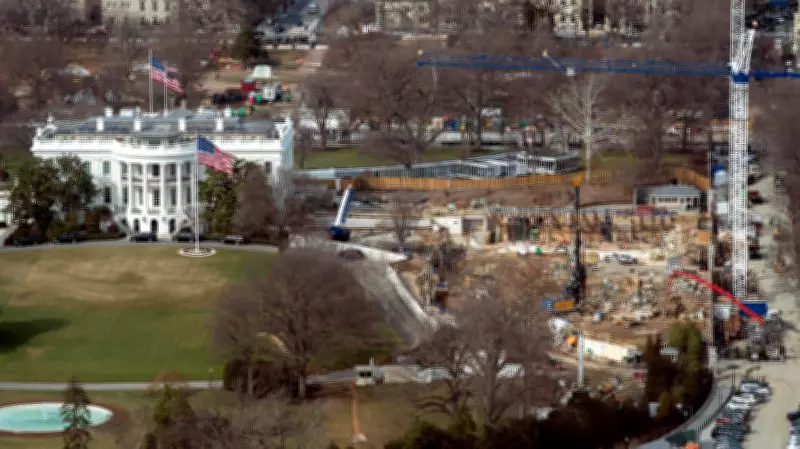
Federal Judge Orders Temporary Halt to Trump's White House Ballroom Project
A federal judge in Washington, D.C., issued a preliminary injunction on Tuesday, suspending the Trump administration's construction of a $400 million ballroom at the White House. This decision comes after the demolition of the East Wing to make way for the new structure.
Judge's Ruling Cites Lack of Presidential Authority
U.S. District Judge Richard Leon, appointed by Republican President George W. Bush, granted the injunction requested by the National Trust for Historic Preservation. In his ruling, Judge Leon stated, "I have concluded that the National Trust is likely to succeed on the merits because no statute comes close to giving the President the authority he claims to have." He emphasized that the President is a steward, not an owner, of the White House for future generations.
Background of the Controversial Project
The White House announced the ballroom project in the summer, with President Donald Trump proceeding to demolish the East Wing by late October 2025. The planned 90,000-square-foot ballroom, designed to accommodate 999 people, was to be funded by private donations, including contributions from Trump himself. However, the project moved forward without input from federal review panels like the National Capital Planning Commission and the Commission of Fine Arts, both of which Trump has filled with allies.

Legal and Preservationist Challenges
The National Trust for Historic Preservation filed a lawsuit seeking to pause the construction until it undergoes multiple independent reviews and receives congressional approval. The group argues that such a significant alteration to a historic landmark requires proper oversight and legal authorization.
Despite the injunction, construction activities were observed as recently as February 2026, with workers continuing efforts on the site where the East Wing once stood. Earlier images from October 2025 show demolition in progress, watched by construction workers from nearby buildings.
Implications for Presidential Power and Historic Preservation
This case highlights ongoing debates over presidential authority versus preservation laws. Judge Leon's decision underscores the legal limits on executive actions involving national historic sites, potentially setting a precedent for future disputes over White House modifications.
The temporary halt allows for further legal proceedings, with the National Trust likely to pursue a permanent injunction based on the judge's findings. The outcome could influence how similar projects are handled, emphasizing the need for compliance with established review processes and congressional involvement.






