

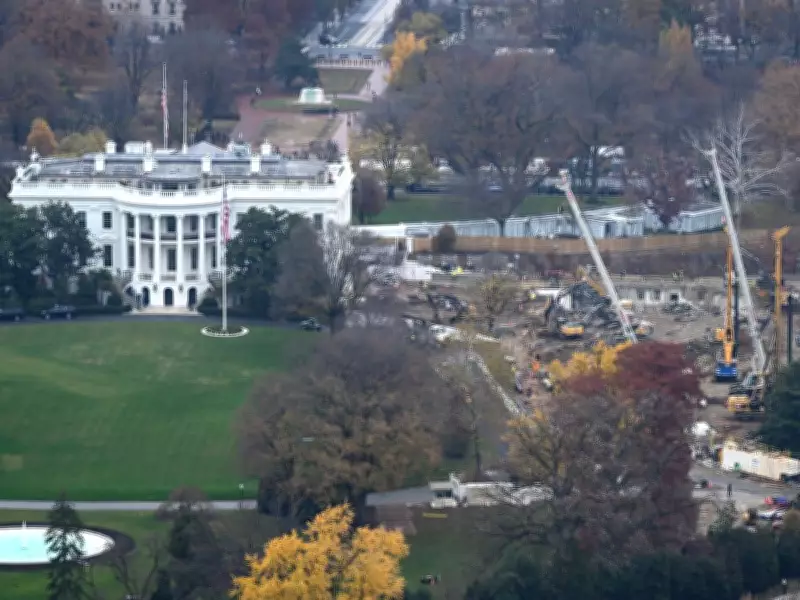
Federal Judge Orders Halt to White House Ballroom Construction
A Washington federal judge has moved to halt U.S. President Donald Trump's efforts to build a new 90,000-square-foot ballroom at the White House until he obtains approval from Congress. Senior Judge Richard Leon of the U.S. District Court for the District of Columbia ruled on Tuesday that the president likely exceeded his legal authority by overseeing construction of the ballroom, which Trump has said could cost as much as US$400 million in privately raised funds.
Judge Questions Presidential Authority Over White House Construction
In his 35-page opinion, Judge Leon expressed significant concerns about the administration's legal arguments. "The President of the United States is the steward of the White House for future generations of First Families. He is not, however, the owner!" Leon wrote emphatically. The judge noted that the administration's legal position assumed Congress "granted nearly unlimited power to the President to construct anything, anywhere on federal land in the District of Columbia, regardless of the source of funds," but found that "no statute comes close" to giving the president that power.
The judge appeared particularly exasperated by the government's contentions, responding to administration positions defending Trump's authority to build the ballroom with "Please!" on four separate occasions. His opinion included more than a dozen exclamation points, reflecting his strong stance on the matter.

Unprecedented Scale and Funding Model
Judge Leon emphasized that the project represents a historically unprecedented approach to White House construction. He reasoned that the White House has "never engaged in a construction project of this size and scale using donated funds" throughout its centuries of existence. The judge firmly stated, "This clearly is not how Congress and former Presidents have managed the White House for centuries, and this Court will not be the first to hold that Congress has ceded its powers in such a significant fashion!"
The project involves the demolition of the White House's East Wing and construction of a new structure, a move that has drawn criticism from preservation groups concerned about the historical integrity of the presidential residence.
Temporary Stay and Security Considerations
Despite his strong ruling, Judge Leon paused the effect of his order for 14 days, citing "logistical issues" with halting construction immediately. He also noted that Trump "may at any time go to Congress to obtain express authority to construct a ballroom and to do so with private funds."
The judge addressed government concerns about safety and security risks from stopping construction, describing claims that pausing work would leave a dangerous hole in the ground as "grasping for straws." "While I take seriously the Government's concerns regarding the safety and security of the White House grounds and the President himself, the existence of a 'large hole' beside the White House is, of course, a problem of the President's own making!" Leon wrote.
Nevertheless, the judge excluded any construction necessary to ensure the White House's safety and security from his order, demonstrating a balanced approach to the practical implications of his decision.
Immediate Appeal and Preservation Group Victory
The Justice Department filed a notice that it planned to appeal Leon's ruling less than two hours after he issued it, indicating the administration's determination to proceed with the project despite judicial opposition.
The ruling represents a significant victory for the nonprofit National Trust for Historic Preservation, which has argued the Trump administration should have obtained congressional approval before undertaking the East Wing demolition and new construction. Carol Quillen, chief executive of the National Trust, stated that Leon's ruling "is a win for the American people on a project that forever impacts one of the most beloved and iconic places in our nation."
The case highlights ongoing tensions between executive authority and congressional oversight regarding federal property management, particularly when private funding is involved in projects affecting historically significant government buildings.






