

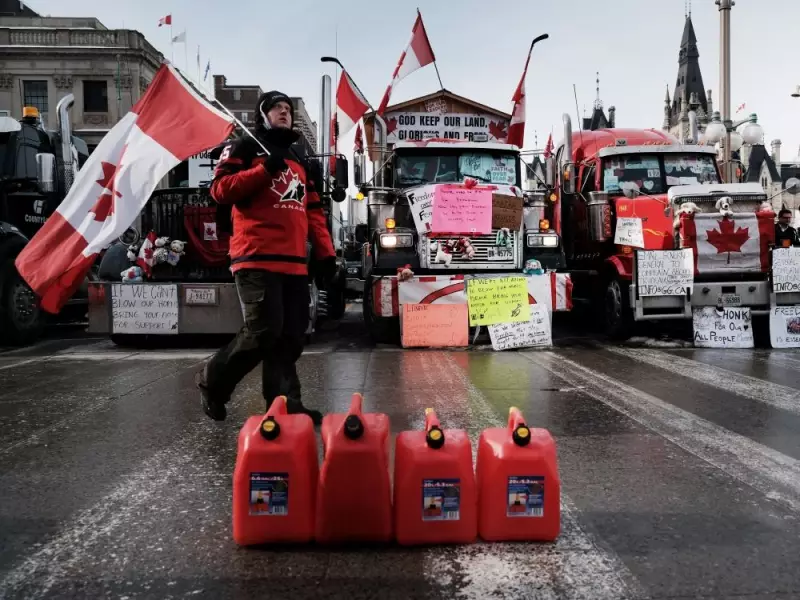
Federal Court of Appeal Unanimously Upholds Ruling Against Trudeau Government's Emergencies Act Use
In a significant legal development, a three-judge panel of the Federal Court of Appeal has unanimously upheld a lower court ruling that the Trudeau government's 2022 invocation of the Emergencies Act was both unlawful and unreasonable. The decision, delivered on Friday, represents a substantial judicial rebuke of the government's handling of the convoy protests that paralyzed Ottawa's downtown core during that period.
Judicial Panel Rejects Government's Legal Arguments
The appellate panel affirmed every aspect of Justice Richard Mosley's original trial division finding, which had concluded with what amounted to a judicial expression of disappointment in the wisdom displayed by the Trudeau cabinet. The government's legal team had attempted to challenge multiple elements of Mosley's decision, but the appeal judges rejected these arguments comprehensively.
At times, the panel's treatment of the government's appeal bordered on disbelief at what they characterized as the ludicrousness of the arguments presented. The Emergencies Act contains carefully crafted provisions designed to limit the use of extraordinary powers that effectively suspend parliamentary governance, federalism principles, due process protections, and other fundamental civil liberties.

Clear Legal Standards Versus Government Interpretation
The legislation establishes explicit written requirements that delineate precisely what constitutes the sort of immediate threat to state integrity that might justify invoking such exceptional measures. According to the court's analysis, government lawyers attempted repeatedly to soften these rigorous standards into what the judges characterized as meaningless goop.
The judicial panel remained hostile to this interpretive strategy throughout their deliberations. They noted that the government's legal team had suggested, among other things, that the statutory phrase serious violence might somehow encompass the annoying deployment of bouncy castles by protesters. Similarly, they had proposed that threats to the security of Canada could potentially include public protesting in ways that make the government appear foolish to international trade partners.
Fundamental Failure to Follow Established Law
What emerges most clearly from the appellate decision is that this case does not primarily concern the complex, often contested relationship between the Charter of Rights, the judicial system, and Parliament. Rather, the court found that the Trudeau administration simply failed to follow the law as written in the Emergencies Act itself.
The government found itself confronted with a substantial, bourgeois-led protest of politically right-wing character in the national capital, and according to the judicial assessment, lost its marbles in response. The administration resorted disgracefully to what amounts to rule by executive fiat rather than adhering to established legal frameworks.
Limited Remedies and Accountability Questions
The judges' frowning assessment and what reads as barely disguised judicial heckling appears to represent about all the remedy Canadians can expect from this situation. As one Alberta lawyer observed on social media, this sort of constitutional overreach represents a textbook example of circumstances that might once have engaged the traditional concept of ministerial responsibility.
Yet the Canadian public has received no expression of regret from any government official involved, let alone any confession of guilt. Certainly no one has faced termination from government employment as a consequence of these actions, nor does anyone appear likely to face such consequences moving forward.
Questions for Current Leadership
Some observers might suggest that a new prime minister now occupies the apex of power, someone perceived as a more serious figure than the individual previously in charge. This development potentially redirects the spotlight toward current leadership.

If the new prime minister can find time away from international engagements like Davos, perhaps he might be asked whether he has thoroughly reviewed Justice Mosley's original decision or last week's onerous restatement and affirmation of that ruling. Further questions might include whether he believes his predecessor and cabinet ministers some of whom he has retained acted prudently given the information available to them at the time.
Most importantly, Canadians might reasonably inquire whether, under similar circumstances, he would employ exceptional governmental power in the same illegal manner, effectively trampling constitutional protections and Charter rights merely to silence disruptive truck horns in Ottawa.





