

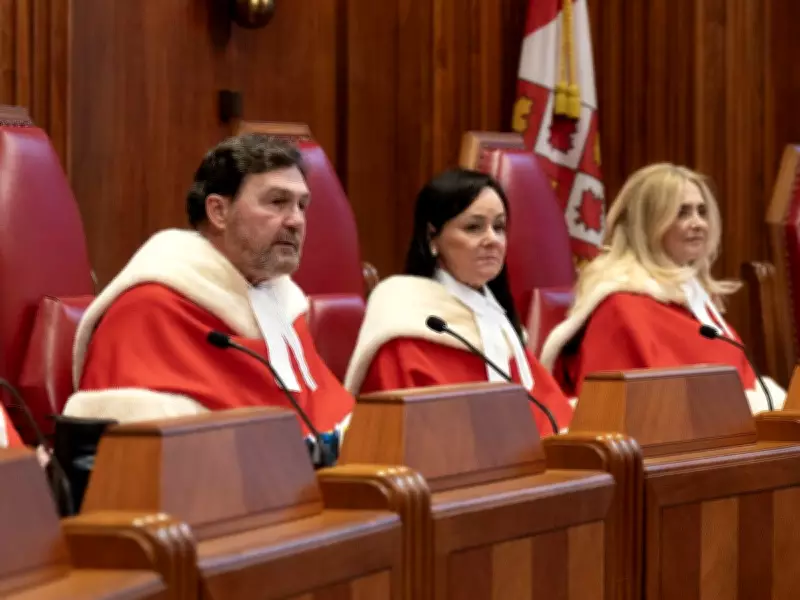
Supreme Court Chief Justice Rejects Extreme Scenarios in Notwithstanding Clause Appeal
Chief Justice Richard Wagner emphasized that the Supreme Court of Canada's ruling on the appeal concerning Quebec's Bill 21 and the use of the notwithstanding clause will not be determined by "extremist or catastrophic" hypothetical examples. This statement came during the final day of hearings, where some parties had suggested the clause could be wielded by a tyrant or used to uphold laws legalizing slavery or summary executions.
Controversial Clause Under Scrutiny
The notwithstanding clause, a contentious provision in the Canadian Charter of Rights and Freedoms, permits a government to suspend certain Charter rights for up to five years. After this period, the invocation must be reviewed by legislators. The clause has been a focal point in debates over Bill 21, Quebec's secularism law, which restricts the wearing of religious symbols by public servants.
During the hearings, opponents of Bill 21 presented a range of hypothetical scenarios to argue for new limits on governments' ability to invoke the clause. For instance, counsel for a Quebec teacher's union contended that a Canadian "mini-Trump" could use the clause to legally enact policies similar to those in the United States. Lawyer Frédéric Bérard asserted, "Everything, or almost, that is happening in the United States could happen here in a perfectly constitutional manner" under the current interpretation of the clause.

Federal Government's Argument and Judicial Pushback
The federal government escalated the argument by questioning whether the clause could shield laws legalizing summary executions or slavery. Constitutional lawyer Guy J. Pratte posed this query to provinces opposing limits, emphasizing that the issue is about capability, not intent. He stated, "It's not a question of whether provinces want to do it, or whether they're inclined to do it. It's whether they can do it."
However, Chief Justice Wagner and Justice Malcolm Rowe intervened multiple times to dismiss these extreme examples. Wagner remarked in French, "I don't think we'll resolve this case by resorting to extreme scenarios." This pushback occurred when interveners, such as the Société de l'Acadie du Nouveau-Brunswick, raised concerns about the clause being used to remove Acadian cultural elements from schools, and the Community Legal Assistance Society questioned its potential use by a tyrannical government.
Implications for Charter Rights and Legislative Review
The hearings highlighted the ongoing tension between governmental authority and Charter protections. The notwithstanding clause, embedded in section 33 of the Charter, has been a tool for provinces like Quebec to advance legislation that may conflict with certain rights. Opponents argue that its broad interpretation necessitates judicial limits to prevent abuse, while supporters maintain it is a legitimate legislative power.
As the Supreme Court deliberates, the focus remains on the specific context of Bill 21 rather than abstract hypotheticals. The decision will have significant implications for how the notwithstanding clause is applied in future cases, balancing democratic governance with fundamental freedoms. The court's ruling is expected to shape the legal landscape for years to come, influencing debates on secularism, minority rights, and the scope of provincial authority in Canada.






