

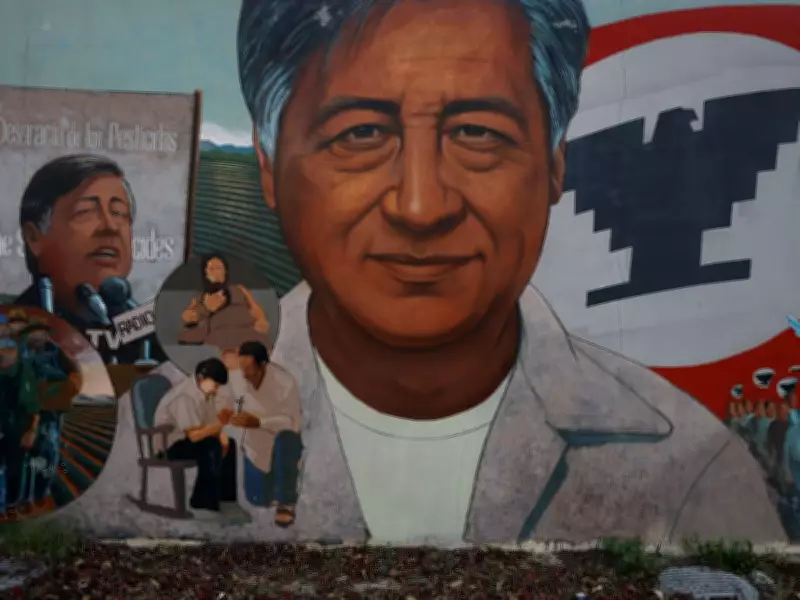
Cesar Chavez's Legacy Challenged by New Sexual Abuse Allegations
The revered image of Cesar Chavez, founder of the United Farm Workers and a symbolic leader of the Mexican-American community during the 1960s and 1970s, is facing unprecedented scrutiny following recent disclosures of sexual abuse allegations. Long suppressed within his inner circle, these revelations paint a starkly different portrait of the man often enshrined alongside civil rights icons like Martin Luther King Jr. and Betty Friedan.
The Public Persona Versus Private Reality
In public, Chavez meticulously cultivated an image of a humble, devout Catholic and family man, championing nonviolent resistance inspired by Gandhi and King. His foundation continues to promote him as "a genuinely religious and spiritual figure," with his Tehachapi retreat designated a national monument. College students in the 1960s rallied to his cause, banning table grapes in cafeterias, while suburban supporters viewed him as a near-divine figure fighting against oppressive "growers."
However, behind this carefully constructed facade, rumors persisted in farming communities of a more complex and troubling character. Chavez was known to send union enforcers to form a "wet line" at the southern border, sometimes assaulting undocumented immigrants to prevent them from working as strikebreakers. His union employed tactics like sabotaging shipments and using illegal secondary boycotts, contradicting his public commitment to nonviolence.

Explosive Allegations Surface
The recent disclosures, reported initially by the left-wing New York Times, have brought long-hidden secrets to light. Dolores Huerta, Chavez's 95-year-old former top aide, has revealed she was raped by him in a grape field over fifty years ago and coerced into sex on another occasion. She also alleges ongoing sexual and emotional abuse, with Chavez fathering two of her children—a secret maintained for more than six decades.
Even more disturbing are allegations that Chavez sexually molested and groomed at least two young girls during their preteen and teenage years. Some victims are now in their 60s, and further disclosures are anticipated. These accusations suggest a pattern of predatory behavior that starkly contrasts with his public persona as a champion of the oppressed.
The Left's Dilemma and Historical Context
The allegations place the political left in a difficult position. Historically, figures accused of misconduct, such as Woodrow Wilson or Earl Warren, have faced erasure from public memory due to their racial offenses. However, Chavez, as a Latino leader and icon of diversity, equity, and inclusion movements, does not fit the typical "old white guy" oppressor narrative. This intersectional conflict complicates efforts to apply the same standards of accountability.
Chavez's canonization following his death in 1993 led to streets, buildings, and even a U.S. Navy cargo ship bearing his name, with his birthday celebrated as a California holiday. Yet, in response to the allegations, upcoming Chavez Day festivities have been canceled, and statues on campuses have been hooded, signaling a swift shift in public perception.
Broader Implications for Historical Figures
These revelations prompt a broader reflection on how society evaluates historical figures. The left has often adopted a reductionist approach, erasing individuals for their flaws without considering the context of their times or weighing their contributions against their misdeeds. With Chavez, the challenge is whether to apply this same standard or to revert to silence, justifying his actions as collateral damage in the pursuit of social justice.
Similar controversies surround other civil rights leaders, such as Martin Luther King Jr., whose alleged promiscuity and failure to intervene in a rape incident have been documented by biographers. The case of Chavez forces a reckoning with the idea that public good and private vice can coexist, challenging the Manichean divide between noble oppressed and evil oppressors.

As more victims come forward and the Chavez inner circle remains silent or confirms the narratives, the legacy of this once-revered figure hangs in the balance. The unfolding scandal not only tarnishes his personal reputation but also raises critical questions about hero worship, accountability, and the complexities of human character in the annals of social movements.





