American Travelers in Europe: Navigating Changing Perceptions Amid Global Tensions
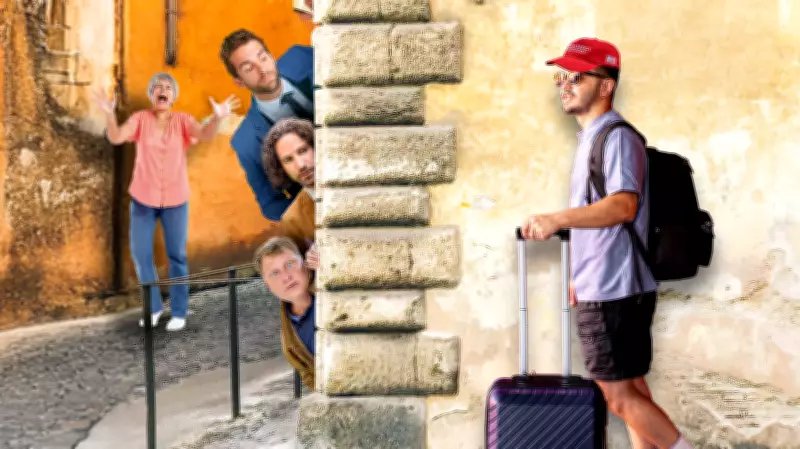
Every summer, countless American tourists journey to Europe seeking cultural enrichment: visiting the Vatican, exploring the Parthenon, and immersing themselves in historic landmarks. Traditionally, they have been greeted warmly by European hosts. However, as global anti-American sentiment intensifies due to trade disputes and military conflicts, many travelers now question whether they will encounter a cooler reception during their European vacations.
Survey Reveals Traveler Concerns
Last spring, a survey conducted by the risk management firm Global Rescue uncovered that 72% of experienced U.S. travelers anticipated Americans would be less welcome abroad in 2025. This concern emerged even before President Donald Trump's more unpredictable geopolitical actions. Since then, the Trump administration has strained alliances by questioning NATO commitments, pressuring European nations regarding Greenland, launching military strikes in Venezuela, and partnering with Israel in a war with Iran that has escalated into the largest Middle East conflict in over two decades—all without a clear strategic plan for the future.
With American tourists increasingly anxious about how they will be perceived, we consulted Europeans and long-term U.S. expatriates for their insights. Do Europeans recognize that America is not monolithic, or do they subscribe to the "ugly American" stereotype?

European Perspectives: Political Criticism, Not Personal Hostility
Céline Flores-Tavukcuoglu, CEO and founder of Céline Concierge, a Paris-based relocation and lifestyle service for international clients, described the current sentiment toward Americans as "a mix of 'poor you' and 'what is going on in your home country?' but not hostility." She emphasized that Europeans are more likely to critique American political leadership than to judge individual American citizens.
Ken Schultz, a political science professor at Stanford University living in Zurich during a sabbatical, concurred. Despite a Pew Research Center study last summer showing declining positive perceptions of the U.S. in many countries due to low confidence in Trump, Schultz noted that many people still distinguish between the president and the American public. "In my personal experience, I have never faced any friction from Europeans when they figure out that I am American," he said. "At most, there is an occasional good-natured quip like, 'Are you sure you want to go back?'"
Schultz observed that many Europeans feel confused and, in some cases, betrayed by U.S. foreign policy, but this rarely translates into hostility toward American tourists. He highlighted a more practical concern: "I would say the bigger concern for American tourists is that the dollar has dropped considerably relative to the euro, pound and Swiss franc since Trump came into office. Americans are still welcome, but their dollar won’t go as far."
Occasional Negative Encounters and Political Tensions
Travelers should prepare for potentially uncomfortable conversations, including rants about Trump. Roman Lillie, an American author and YouTuber residing in Paris, shared a recent negative experience: "I had a negative encounter just last week with a woman from West Africa who was curt to me at a market, while angrily complaining that she 'doesn’t like Trump.'" Lillie, a woman of color, did not expect such a reaction based on her nationality alone. "The fact that I’m American seemed to be all she needed to hear to have disdain," she noted.
Given Trump's polarizing nature, travelers might even be asked about their voting choices. A viral TikTok video depicted a woman harassed in a Northern Ireland pub after refusing to disclose whom she voted for, a question she deemed sensitive. Response videos criticized her discomfort, with one X user joking that videos of MAGA tourists facing criticism abroad had become her "favorite genre of TikTok right now."

Echoes of the 'Freedom Fries' Era
Current European attitudes somewhat mirror those during the George W. Bush "freedom fries" era, when some in Congress proposed renaming french fries to protest France's opposition to the U.S.-led invasion of Iraq. Flores-Tavukcuoglu recalled that anti-French sentiment lingered: "When I first moved abroad in 2013, and George W. Bush was more prominent in American culture, when I would mention that I’m from Texas, the French would automatically joke, point two finger pistols in the air—the most obvious cliché about Texas—and mention GWB." She described that era as more playful banter, whereas today's climate feels more somber. "With Trump in the White House, there’s more concern and a sense of shared stakes, particularly around NATO and global security. It feels less like ridicule and more like authentic worry."
Avoiding the 'Ugly American' Stereotype
The "ugly American" trope—portraying Americans as arrogant and culturally insensitive—has persisted for decades. Adriel Sanders, an American attorney who relocated to Paris before the COVID-19 lockdown, remarked, "The fact is, many Americans are quite loud and obnoxious when interacting with foreigners." She recounted an incident near the Louvre where a boorish American man interrupted her phone conversation, shouting slowly in English and offering a coin condescendingly. "I see a certain type of American engage in this kind of behavior all the time," she said.
Kelsey Heinrichs, a travel blogger based in London, advised against overthinking perceptions: "I actually see a lot of anxiety online from Americans worrying about how they’ll be perceived, and I think that concern can be a little self-focused. Europeans are dealing with plenty of their own political, economic and social issues, so most people simply aren’t scrutinizing tourists that closely." She noted that Europe faces its own challenges with rising right-wing populism, fostering a sense of shared understanding and frustration. "Many Europeans—especially women and minority communities—recognize the parallels and feel solidarity with Americans navigating this difficult political climate."
Practical Tips for American Travelers Abroad
Despite the complexities, there are best practices for Americans traveling abroad. Being friendly and polite is crucial, especially now. Lillie advised: "Since the perception of the United States is linked to aggression and bully-ish behaviors at the moment, anything that seems to be pushy or violate the consent of others is a bad idea. I’m talking about things as simple as taking photos or videos or even picking up food without permission." She emphasized learning from her own experiences: "Ask before you assume, and remember, 'please' and 'thank you' are your best friends, especially if you can learn how to say them in the local language."
Heinrichs discouraged pretending to be Canadian, a common piece of travel advice. "I’ve noticed that many Americans introduce themselves by saying their city or state they’re from rather than the country, whereas the rest of the world will always say which country they’re from first," she observed. "Honesty is always the way to go, in my opinion." She reassured travelers that they need not apologize for their nationality, concluding: "Travel has always been one of the most humanizing experiences we have. Most people you meet abroad are far more interested in who you are as a person than in your passport or your politics. Don’t let fear of judgment hold you back from booking that trip. Life is truly too damn short."