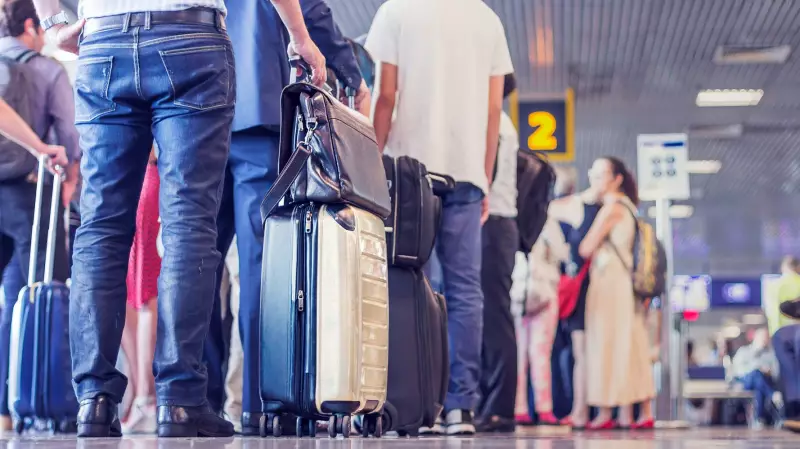
Navigating the airport and boarding a flight can be a high-stress experience, but industry professionals emphasize that this pressure never justifies discourteous behaviour towards fellow passengers or crew. A particular flashpoint for tension is the boarding process itself, where common courtesies often seem to be left at the gate.
The Gate Crush and Boarding Blunders
"Don't be gate lice!" cautions Jodi R.R. Smith, president of Mannersmith Etiquette Consulting. She uses the term to describe travellers who immediately swarm the boarding gate at the first announcement, rather than waiting for their assigned group. This creates unnecessary congestion and frustration for those trying to board.
Jackie Vernon-Thompson, founder of the From the Inside-Out School of Etiquette, agrees. "It is most annoying when you are to board the plane and passengers congregate at the entrance, and you must tiptoe through and consistently say, 'Excuse me, excuse me,'" she told HuffPost. Her advice is simple: "Give way. It is not your turn. Respect those who were called to board."

This anxiety is often fueled by airline policies, notes Smith. "Charging for checked luggage and then telling full-flight passengers there will not be enough overhead space creates scarcity and increases anxiety," she explains. While travelling with just a carry-on is economical and environmentally friendlier, it leads to intense competition for bin space, making passengers feel they must board immediately.
Nevertheless, etiquette expert Nick Leighton, host of the "Were You Raised by Wolves?" podcast, states the obvious but often ignored rule: "It should go without saying, but don't try to sneak on the plane before your group is called."
Onboard Etiquette for a Smoother Process
Once your group is called, efficiency is key. "When boarding the plane, have your boarding pass out and ready to scan once you reach the entrance," advises Vernon-Thompson. Being prepared streamlines the process for everyone behind you.
Diane Gottsman, author of "Modern Etiquette for a Better Life," adds that once on the aircraft, you should "be ready to store your carry-on and step out of the aisle where your seat is located. Allow people to continue to pass quickly." This means avoiding the temptation to push past others in the narrow aisle or stopping for a chat, which holds up the entire line.
A critical point of contention is overhead bin space. "The overhead bin above your seat does not belong to you," Leighton firmly states. "Sharing is caring." Airlines specify that you are entitled to space for one small, size-compliant bag in the overhead; personal items like purses must go under the seat in front of you. If you require more legroom, the polite choice is to check a bag.
Respecting Space and Crew From Seat to Sky
Your responsibilities continue after you sit down. Vernon-Thompson highlights a common irritant: "Once you are seated, do not immediately recline your seat for comfort. Proper protocol is to refrain from reclining your seat until the pilot has given permission." Reclining during boarding makes it difficult for the passenger behind to stow their belongings and settle in.
It's also important to manage your belongings carefully. Smith warns, "Watch your roller bags!" as they can easily get away from you. Be mindful when lifting luggage into the bin to avoid hitting someone, and offer help if you see another passenger struggling.
Flight attendants are there for safety and service, but timing matters. "Wait until everyone has been seated before asking for a cocktail," suggests Gottsman. Allow them to complete the critical boarding procedures before making non-urgent requests.
Above all, experts urge kindness. Recognize that flying is stressful for everyone, including families with young children. "Smile and say hello to the flight attendant. Start your trip off on the right foot with a pleasant demeanor," says Gottsman. A little patience and a positive attitude can significantly improve the travel experience for your fellow passengers and yourself.