Gen Z's Intense Debate Over Age Gaps in Relationships: Ethics and Power Dynamics
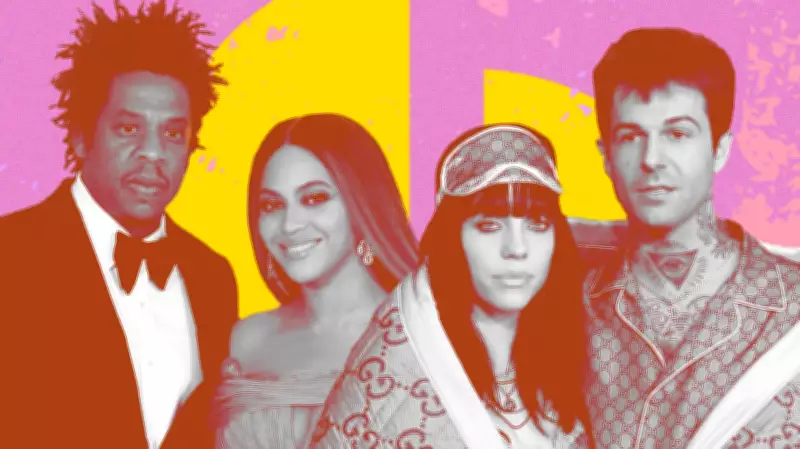
In recent times, members of the Beyhive have sparked discussions about whether Beyoncé was "groomed" at age 19 when she began dating Jay-Z, who was in his early 30s. Similarly, in 2022, then-20-year-old Billie Eilish stirred controversy by dating musician Jesse Rutherford, who is ten years her senior. These incidents raise broader questions: Is a five-year age difference in a relationship problematic? What about a three-year gap?
On social media platforms, Generation Z individuals—particularly those who are highly active online—are continuously debating the ethical implications of age gaps in romantic partnerships. Many argue that even if a relationship is legally permissible, it may not necessarily be ethical. This scrutiny is unsurprising given that Gen Z has grown up alongside the #MeToo movement, making them acutely aware of power imbalances and the nuances of consent.
Celebrity Examples Fueling the Conversation
Recent celebrity pairings have provided ample material for these discussions. For instance, the brief romance between 21-year-old Aoki Lee Simmons and 65-year-old restaurateur Vittorio Assaf drew widespread criticism after viral photos showed them vacationing in St. Barts. Critics labeled it unseemly, with some arguing that the mere fact both are consenting adults is a point often exploited by groomers. As one young woman on Threads noted, "Adulthood was meant to signify voting or draft age, but everyone knows your prefrontal cortex is not fully formed at this age." This distinction between brain development and chronological age frequently arises in such debates.

Gender-swapped examples also attract attention. Actor Aaron Taylor-Johnson and filmmaker Sam Taylor-Johnson, who met when he was in his late teens and she was in her early 40s with two children, have faced skepticism. Despite the actor's statement that he felt a connection beyond age, some fans question the dynamics, with one TikTok video highlighting concerns about male grooming victims.
Even smaller age gaps are under scrutiny. A tweet with approximately 80,000 likes declared, "At 25, I wouldn't even date a 21 year old." Similarly, Billie Eilish's relationship with Jesse Rutherford sparked outrage, with one viral tweet emphasizing the ten-year difference by noting, "jesse rutherford was alive during george h w bush's presidency . billie eilish cannot legally drink."
Long-standing relationships are not exempt. Ryan Reynolds and Blake Lively's 11-year age gap has been analyzed, and Beyoncé's early relationship with Jay-Z continues to be debated. Non-celebrity couples are also called out, as seen in a Threads post where a woman humorously noted her child refers to her husband as a "predator" due to their age difference.
Why Gen Z Appears More Averse to Age Gaps
Is Generation Z simply more prudish on this topic than previous generations? According to Justin Lehmiller, a research fellow at the Kinsey Institute and host of the "Sex and Psychology Podcast," the stigma around age-disparate relationships is not new. In a 2008 study he co-authored, age-discrepant couples reported experiencing more social disapproval than even gay or interracial couples. What has changed, Lehmiller explains, is Gen Z's willingness to publicly voice disapproval, often on personal social media pages.
Lehmiller states, "To some in Gen Z, age-gap relationships read as being inherently exploitative because they perceive age discrepancies as necessarily creating a power imbalance that favors the older partner." Historically, both younger and older partners faced scorn, with younger women often labeled "gold diggers." However, Gen Z tends to view younger partners as victims, using terms like "groomed" more frequently.

Gigi Engle, a certified sex and relationship psychotherapist, warns that overusing "grooming" dilutes its meaning. She notes, "The narrative is really toxic here and in many other cases. Trans people are groomers, gay people are groomers, older people dating younger people are groomers—and this just isn't accurate. It's a really fear-mongering time we live in." Engle suggests that younger people may be more focused on this issue due to their age and susceptibility to manipulation, but emphasizes that age-gap relationships have existed throughout history and are not universally problematic.
Diverse Perspectives from Gen Z Individuals
Conversations with Gen Zers reveal a spectrum of opinions. Layla, a 23-year-old, prefers dating within a two- or three-year range, having found interactions with older men awkward due to generational differences. She believes relationships between an 18- and 25-year-old are problematic, regardless of gender, and wishes women were held more accountable for predatory behavior.
Mona, a 21-year-old college student, even finds her parents' 11-year age gap somewhat "predatory." She is wary of individuals who consistently date much younger partners, citing Leonardo DiCaprio as an example. Mona also speculates that the COVID-19 pandemic may influence Gen Z's apprehension, as many feel mentally younger than their chronological age due to the disruption.
In contrast, Rei, a 22-year-old queer individual, does not see age-disparate relationships as inherently problematic. They note that power dynamics involve more than just age and that age gaps are more common in the queer community. Rei criticizes the overapplication of "grooming" and views the focus on age gaps as an overcorrection from the #MeToo movement.
Amelia, 24, argues that life stage matters more than actual age. She distinguishes true grooming from age gaps and acknowledges that while some Gen Zers take judgment too far, their concerns may stem from early exposure to online oversexualization. Despite this, she believes consenting adults should be free to make their own choices.
Lehmiller adds that research often shows more equity in age-gap relationships than assumed. Ultimately, the Gen Zers interviewed agree that while personal opinions vary, consenting adults have the right to pursue relationships as they see fit, even if others find them unsettling.