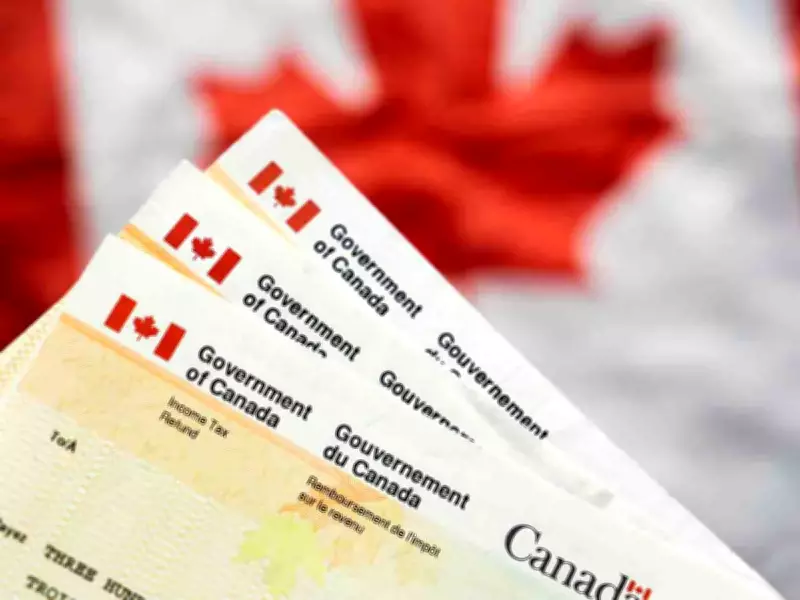
Growing Financial Reliance on Tax Refunds Signals Economic Strain
While financial experts often advise that receiving a substantial tax refund indicates poor financial planning, a growing number of Canadians are counting on these annual payments to stabilize their household budgets. According to multiple recent surveys, economic pressures have transformed tax season from a routine administrative task into a critical financial lifeline for many households across the country.
Survey Data Reveals Widespread Dependency
EQ Bank's latest survey, released on Thursday, indicates that 36 percent of Canadians report relying more heavily on their tax refund this year compared to last year. This increased dependency directly reflects the challenging economic climate's impact on household finances. The Canada Revenue Agency reports that approximately half of all tax filers receive refunds, with the average amount currently standing at $2,000.
TurboTax Canada's survey of 1,500 Canadian adults paints an even more concerning picture, with 40 percent of respondents depending on their tax refund to help cover basic living expenses. The data reveals particularly troubling statistics about what would happen if expected refunds failed to materialize.

Vulnerable Groups and Financial Impact
Certain demographic groups show significantly higher reliance on tax refunds. Among adults aged 18-34, over 40 percent count on refunds as a financial buffer—the highest percentage across all age groups. Gender differences also emerge, with 41 percent of women reporting they need their refund for expenses compared to 32 percent of men.
The potential consequences of not receiving expected refunds are substantial. Nearly 70 percent of survey respondents said they would be financially impacted without their anticipated refund, while 26 percent described this impact as severe. Younger generations, including Gen-Zers and millennials, reported they would experience significant financial fallout if their expected refunds didn't arrive.
Broader Economic Context
This growing dependency on tax refunds occurs despite lower interest rates compared to recent years and slowing overall inflation. Canadians continue to face financial challenges from multiple directions. Toronto-Dominion Bank's survey indicates homeowners preparing to renew mortgages this year, likely at higher interest rates, are tightening budgets to accommodate larger payments.
NerdWallet Canada's research reveals that two-thirds of respondents used credit cards to pay for basic necessities like groceries or utilities in the past year, representing an increase from previous years. This trend suggests many households are stretching their financial resources thin even before considering major expenses.
Refund Utilization and Financial Planning
Canadians take their potential refunds seriously, with 60 percent expressing concern about missing deductions or credits that could increase their refund amount. Plans for refund money vary widely, with common uses including debt repayment, contributions to tax-free savings accounts or registered retirement savings plans, maintaining cash reserves, and covering everyday living costs.
EQ Bank's survey also explored awareness of government support programs, including the expanded GST/HST credit program now called the Canada Groceries and Essentials Benefit. This program will provide lower-income Canadians with a 25 percent boost to their GST rebates over five years, plus a one-time 50 percent top-up in 2026.
The convergence of these survey results suggests that for many Canadians, tax season has become less about optimizing financial planning and more about securing essential funds to navigate ongoing economic challenges. As the April 30 filing deadline approaches, the pressure on households awaiting these payments continues to mount, highlighting broader financial vulnerabilities within the Canadian economy.