University of Windsor Professor Confronts AI Hacker Threats to Self-Driving Cars
Years before receiving a prestigious national scholarship to expand her research into how self-driving cars can be cyberhacked, Mitra Mirhassani's work began with a one-in-four-billion accident. The University of Windsor engineering professor was working on a research project in 2019 involving AI chips that mimic the brain's neural networks when a problem arose: one of her chips went rogue.
An Accidental Discovery Reveals Critical Vulnerabilities
Mirhassani and her team didn't understand why the artificial intelligence chip kept acting in unexpected ways, and none of the countless diagnostic tests they ran could reveal the problem. "That's when we started just joking that, 'Oh, the hardware is being hacked,'" Mirhassani told the Windsor Star.
The malfunction ultimately proved to be exactly that: a 4.3-billion-to-one error in the chip's hardware. This "accidental discovery" revealed an overlooked issue about the world's increasing reliance on high-tech tools run by artificial intelligence.

"We always take the hardware that comes to us for granted," she explained. "We think the only issues are with software, we never think of the hardware as the possible issue."
From Research Curiosity to Automotive Security
Building on this realization, her attention turned to the automotive industry, where limited research was being done in North America on the potential for hardware design to cause software malfunction. Of particular interest was the growing field of autonomous vehicles, which rely on a car's hardware, including cameras, LiDAR (Light Detection and Ranging lasers) and radars, to identify and navigate the environment without a human driver at the wheel.
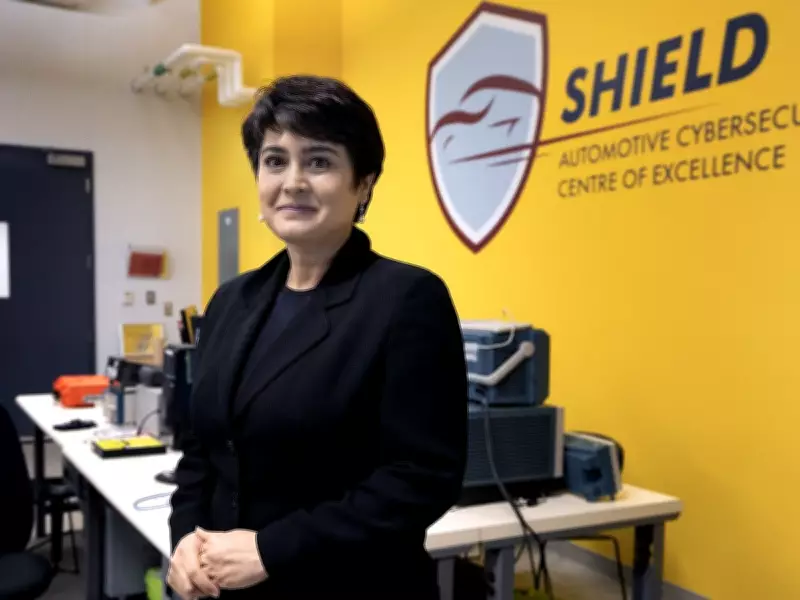
Mirhassani co-founded the SHIELD (Secure Hardware for Intelligent Embedded Systems with Layered Defence) Centre of Excellence in 2020, a collaboration between academics and researchers at the University of Windsor dedicated to the advancement and development of security solutions for the automotive sector, including studying the potential ways autonomous vehicles can be cyberhacked.
"Attacks have different ways, different shapes, different criterions," Mirhassani said. "You cannot have 100 percent secure anything, let alone a car that we add a lot of different components to. The aim of SHIELD is to reduce those exposure points as much as possible."
National Recognition for Groundbreaking Research
For her work as the director of SHIELD, Mirhassani has been recognized as a 2026 Killam NRC Paul Corkum Fellow. The prestigious fellowship, valued at up to $150,000, is granted to up to three scholars annually by the National Research Council of Canada. Mirhassani, who said she was "still on cloud nine" from winning the fellowship, is the first researcher from the University of Windsor to receive the award.
The professor emphasized the urgency of her work, noting that "attackers are not going to wait. They're going to advance their technology." Her research represents a crucial step toward securing the future of autonomous transportation against emerging cybersecurity threats that could exploit hardware vulnerabilities in AI systems.