West Toronto E-Bike Maker Redefines Factory Floor with Lean Chinese Supply Chain
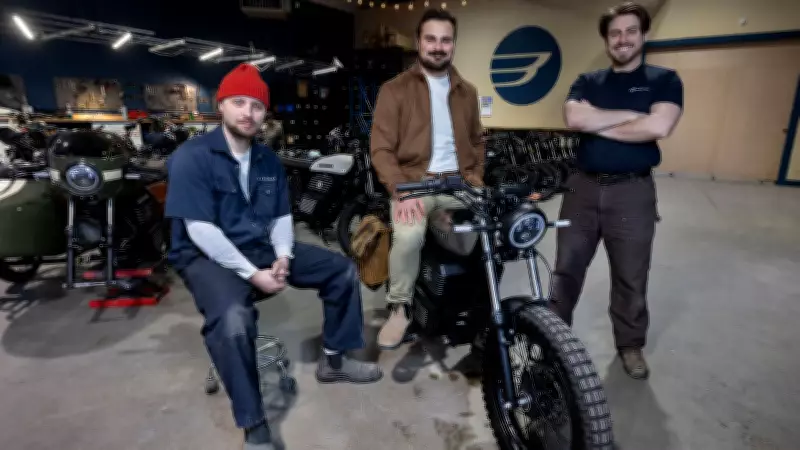
In an industrial garage nestled among narrow row houses, big-box stores, and former stockyards in Toronto's West End, the startup Beachman Motor Co. Ltd. is operating a scaled-down assembly plant, producing hundreds of all-electric retro-1960s-style motorcycles annually. The company thrives in one of Canada's most expensive areas by importing nearly all its motorcycle parts from factories in China and assembling them locally with just a dozen or so employees—a skeleton crew compared to traditional vehicle assembly plants.
A Pragmatic Approach to Manufacturing
Ben Taylor, chief executive and co-founder of Beachman, emphasized that the company initially attempted to source motorcycle frames in North America but ultimately prioritized affordability. "If we could make it here, great, but it's not feasible," he said, noting that Beachman creates jobs in Ontario and retails bikes for $6,000 each. "Everything that can be done here is being done here." This model showcases a different vision of Canadian manufacturing, contrasting with political pushes for local supply chains.
The journey of Beachman—from an idea to a side hustle to a lean-budget startup—highlights why sourcing from Chinese factories remains appealing to Canadian entrepreneurs, despite governmental efforts to revive homegrown manufacturing. Taylor, a former cannabis salesman, explained that using Chinese components was essential for cost control, with some parts not even manufactured in Canada. "We're pragmatists and we're not embarrassed about it," he stated.

Concerns Over Industry Impact
However, Beachman's business model of a scaled-down assembly plant raises concerns among auto executives and labor officials. They fear it could spread across Canada, especially as 49,000 Chinese-made electric vehicles enter the country duty-free annually. Prime Minister Mark Carney has suggested Chinese EV makers might invest in Canadian manufacturing soon, but some worry about "knockdown kits"—components made in China and assembled locally—which could undermine Ontario's auto-parts ecosystem and eliminate tens of thousands of jobs.
One labor union official, who requested anonymity, warned, "It'll be 100 guys putting tires on cars," a stark contrast to modern plants employing thousands and supporting extensive supply chains. Yet, Taylor, 29, defended the approach, noting it was the only viable path for his company, which struggled to raise capital and relied on co-founder Steve Payne's home equity and online crowdfunding to start production.
Building a Brand and Overcoming Challenges
Beachman's origins trace back to Taylor's vision of marrying midcentury design with modern technology, inspired by British café racers and a desire for simplicity. The company opened a coffee shop in Toronto's Junction neighborhood as a dual showroom, with Taylor serving as both barista and CEO. "We didn't go out and raise $20 million and then just blow it all," he said, highlighting a frugal strategy focused on customer service and joy.
Key challenges included obtaining federal authorization for motorcycle manufacturing, which took four years, and navigating supply chain disruptions during the COVID-19 pandemic. A delayed shipment from China in 2022 nearly bankrupted the company, but a $100,000 loan from the Business Development Bank of Canada provided a lifeline. Additionally, Beachman leverages federal programs like the Student Work Placement Program to subsidize wages for university engineering students, keeping assembly costs competitive with China.
Future Expansion and Philosophy
Today, Beachman sells its flagship '64 model for $6,000, with a top speed of 70 km/h and a range of up to 90 km, targeting urban commuters. The company plans to expand into Europe, expecting 75% of sales there within two years, and may open an assembly plant in Spain. Side projects include converting internal combustion vehicles to electric and developing a new motorcycle line called the Aviator.

Taylor remains committed to simplicity, with bikes lacking screens or Bluetooth to encourage riders to disconnect. "The idea we're selling is, 'If I buy this bike, my life is going to change,'" he said, reflecting on customer feedback. Despite copycat concerns, he focuses on growth, recently touring the U.S. to sign new dealers. Beachman's story illustrates how innovation and global supply chains can reshape local manufacturing in Canada's evolving auto industry.