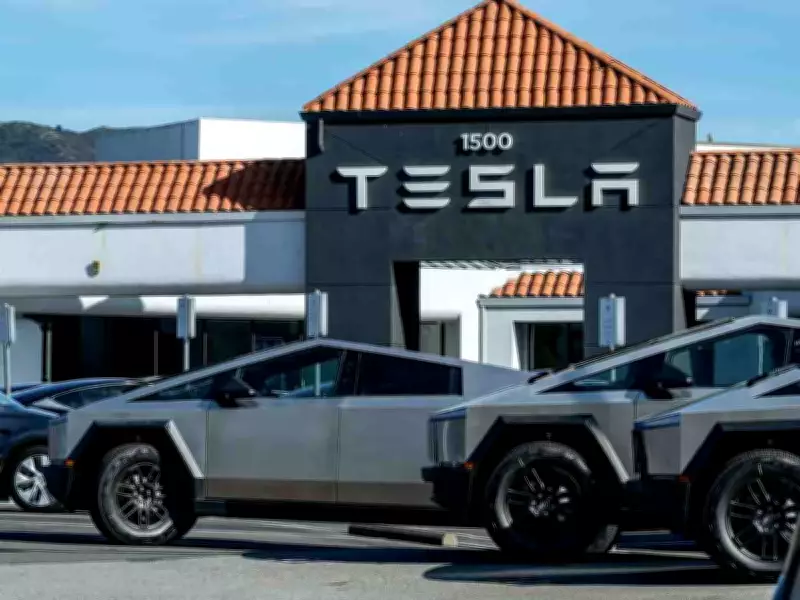
SpaceX Purchases Prop Up Tesla Cybertruck Sales as Consumer Demand Weakens
Sales of Tesla Inc.'s Cybertruck have been artificially inflated in recent months by purchases from Elon Musk's other companies, revealing troubling signs that the controversial electric pickup is struggling to attract everyday buyers. Registration data obtained by Bloomberg News shows an unusual pattern of inter-company transactions within Musk's business empire that has propped up Cybertruck numbers during a period of declining consumer interest.
Internal Transactions Mask Consumer Decline
According to registration data from S&P Global Mobility, SpaceX accounted for 1,279 Cybertrucks registered in the United States during the fourth quarter of 2023. This represents more than 18 percent of the total 7,071 Cybertrucks registered during that period. Additionally, Musk's other ventures including xAI, Boring Co., and Neuralink acquired another 60 vehicles during those same months.
This means nearly one in every five Cybertrucks registered during the fourth quarter were essentially transferred from one part of Musk's business empire to another. These internal purchases, likely exceeding $100 million in total value, have continued into 2024, creating an artificial boost to Cybertruck registration numbers.

Consumer Demand Plummets Without Internal Support
The figures reveal the extent to which consumer demand has faltered just two years after Tesla began delivering the electric pickup. Without the sales to other Musk-run companies, Cybertruck registrations in the fourth quarter would have fallen by a dramatic 51 percent.
"Tesla is running out of buyers for the Cybertruck," said Sam Fiorani, vice president of global vehicle forecasting for advisory firm AutoForecast Solutions. "The internal purchases from SpaceX and other Musk companies are masking what appears to be significant consumer resistance to this vehicle."
Neither Tesla, Musk, SpaceX, Boring, nor Neuralink responded to requests for comment about these internal transactions. It's worth noting that SpaceX acquired xAI in February 2024, further consolidating Musk's business interests.
Broader Challenges for Tesla
Tesla faces increasing pressure to reverse slumping sales across its entire vehicle lineup as the company confronts the prospect of a third consecutive annual decline. Once the undisputed leader in electric vehicles, Tesla was surpassed by China's BYD Co. as the world's top seller of EVs last year.
Investors have largely overlooked Tesla's declining auto sales as Musk reorients the company around futuristic pursuits including robotaxis and humanoid robots. However, these products remain years away from becoming tangible business lines, and shareholders' patience appears to be wearing thin. Since hitting a record high in mid-December, Tesla's stock has lost approximately one-fifth of its value.
Cybertruck's Rocky Road to Market
The Cybertruck debuted with significant fanfare in late 2023, designed to diversify Tesla's lineup as a rugged alternative to the sleek Model Y SUV and Model 3 sedan that account for the vast majority of the company's auto sales. Tesla aimed to compete in the lucrative U.S. pickup market traditionally dominated by Ford Motor Co., General Motors Co., and Stellantis NV.
Before the launch, Musk predicted that Tesla would be producing 250,000 Cybertrucks annually by 2025, calling it the best product the company has ever made. However, multiple challenges emerged from the outset that have hampered the vehicle's market acceptance.
The Cybertruck's angular, unconventional design proved divisive among consumers, and the attention-grabbing vehicle occasionally became the target of ridicule and vandalism during periods when public sentiment turned against Musk. Additionally, the truck arrived with a much higher price tag than initially promised, with early versions costing over $100,000—far exceeding the under-$40,000 starting price first touted in 2019.
These factors, combined with the recent revelation that nearly 20 percent of registered Cybertrucks went to Musk's own companies rather than individual consumers, raise serious questions about the vehicle's long-term market viability and Tesla's strategy in the competitive pickup segment.