Ontario Premier Doug Ford Opposes Stellantis-Chinese EV Deal Without Local Parts
Ontario Premier Doug Ford has issued a strong warning against any potential agreement between Stellantis NV and China's Zhejiang Leapmotor Technology Co. to manufacture electric vehicles in his province unless the automakers commit to purchasing local parts. The premier's stance highlights growing concerns over the impact of foreign manufacturing on domestic industries.
Ford's Firm Opposition to "Knockdown Kits"
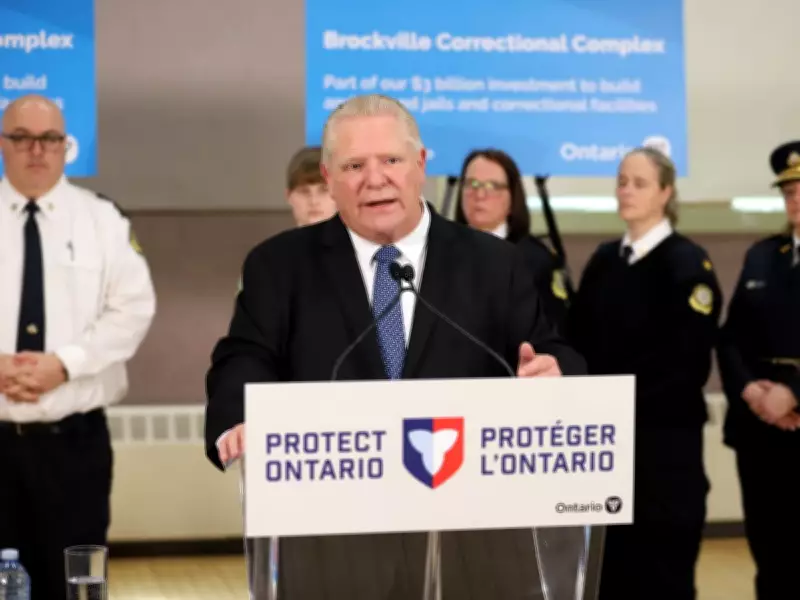
Ford specifically criticized the potential use of "knockdown kits," where vehicles are largely assembled in China and then shipped overseas for final assembly. "If they're bringing kits over made in China, all that does is undermine every single auto worker we have in Ontario," Ford stated in an interview late Wednesday in Dallas, where he is on a trade mission. "I am dead against it." He emphasized that he would only support an investment that involves a fully functioning factory relying on local parts suppliers.
Details of the Stellantis-Leapmotor Discussions
According to reports from Bloomberg News, Stellantis and Leapmotor are in early-stage talks about producing electric vehicles in Canada, with a focus on an idled Stellantis factory in Brampton, Ontario. The discussions have involved Industry Minister Melanie Joly, who stated that "any new auto investments will prioritize Canada's supply chain, including Canadian labour and parts suppliers." This aligns with Ford's demands for local economic benefits.

Labor Union and Broader Industry Concerns
Unifor, the labour union representing workers at the Brampton plant, expressed "serious concerns" about a partnership with a Chinese firm. The union warned that using knockdown kits would employ only a small fraction of workers, potentially jeopardizing jobs. Ford echoed these worries, adding, "What I do have a problem is when we get undermined and auto workers get undermined by cheap Chinese parts and vehicles."
Context of North American Trade Tensions
The potential for Chinese-led vehicle production in Canada reflects the ripple effects of U.S. President Donald Trump's tariffs on foreign-made cars and trucks, which have disrupted the integrated North American auto sector and cost automakers billions. Ontario, as the home of all of Canada's automotive assembly plants, has significant stakes in these trade tensions. The province produced about 1.2 million vehicles last year, mostly for export to the U.S., but traditional U.S. automakers like Stellantis, Ford Motor Co., and General Motors Co. have reduced their Canadian production.
Ford's opposition underscores the delicate balance between attracting foreign investment and protecting local industries in an evolving global automotive landscape.