Canada's Automotive Sector Faces Unprecedented Challenges in Global Trade Landscape
As 2026 unfolds on the international trade front, the term "unprecedented" has become more than just a buzzword—it accurately describes the complex situation facing Canada's automotive industry. The sector finds itself navigating a perfect storm of geopolitical pressures, shifting trade agreements, and technological transformation that demands immediate strategic attention.
Historical Context Meets Contemporary Crisis
The recent anniversary of the Canada-U.S. Auto Pact, signed sixty-one years ago by Prime Minister Lester B. Pearson and President Lyndon B. Johnson, serves as a poignant reminder of how dramatically the automotive landscape has evolved. For three generations, this agreement provided a stable framework that supported Canadian auto workers in producing millions of vehicles under free trade conditions.
However, this historical foundation is now under direct threat. The current U.S. administration has actively pursued policies aimed at repatriating automotive manufacturing, with former President Donald Trump explicitly stating his belief in using tariffs as tools to achieve this goal and questioning the necessity of Canadian vehicles for American markets.

Investment Paradox and Market Realities
Despite substantial government commitments exceeding $50 billion in federal and provincial support for electric vehicle and component production since 2020, the Canadian automotive sector has experienced significant setbacks. Major manufacturers including Stellantis, Ford, and General Motors have withdrawn targets, scaled back investment commitments, and downsized production lines at their Canadian facilities.
This troubling trend has created a situation where government leaders are now attempting to recover taxpayer dollars originally allocated to support these manufacturers, highlighting the urgent need for a more effective strategic approach.
The China Factor and New Market Dynamics
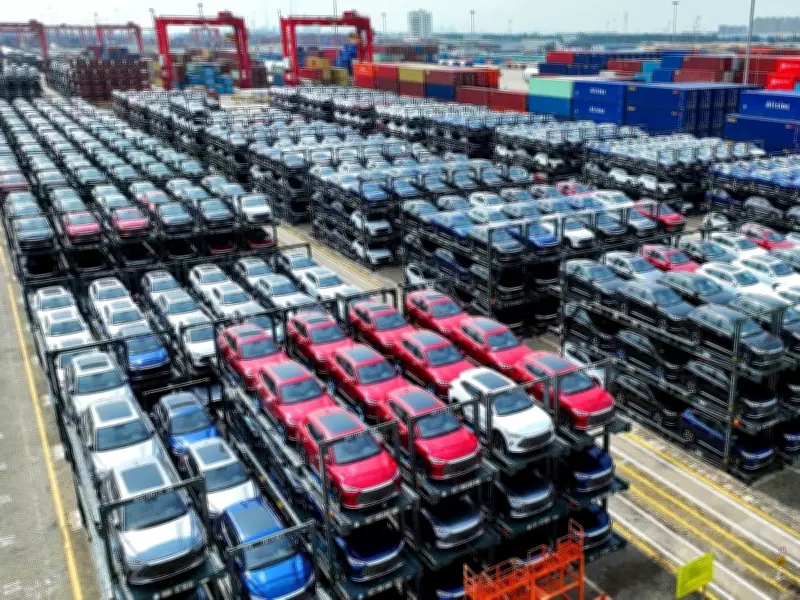
A significant development occurred on January 16, 2026, when an agreement was signed allowing an initial wave of low-tariff electric vehicles from China to enter the Canadian market. This arrangement represents Canada's opening move in what has become a multi-level chess game for the future of one of the nation's largest industrial sectors.
The agreement establishes a tariff rate quota system that will permit 49,000 Chinese-made EVs annually at a 6.1 percent tariff rate, creating an important opening through the 100 percent tariff wall Canada implemented against Chinese EVs in 2024. Notably, half of these vehicles must be imported at prices of $35,000 or less—an affordability measure designed to partially compensate for the withdrawal of government rebates to EV purchasers across Canada.
Strategic Imperatives for Canadian Automotive Leadership
The convergence of U.S. protectionist measures, increased Chinese competition, and legitimate concerns about the future of approximately 125,000 Canadian auto workers creates an urgent need for a comprehensive new strategy. The Auto Pact may represent the last coherent automotive sector strategy developed in Canada, making the current moment particularly critical for strategic planning.
Prime Minister Mark Carney's recent statement at the World Economic Forum in Davos that "nostalgia is not a strategy" underscores the necessity of forward-looking approaches. Canada requires a plan that can simultaneously guide the transition away from dependency on U.S. markets while positioning the nation as a leader in electric vehicle production.
The global automotive industry is undergoing a fundamental transformation, with electric vehicles representing the future of transportation. Canada's response to this transformation will determine whether the nation's automotive sector becomes a leader in this new era or remains vulnerable to external pressures and market shifts.
As international examples demonstrate—such as BYD establishing manufacturing facilities in Hungary and Turkey with plans for expansion into Spain to access European markets—strategic positioning within global supply chains has become increasingly important. Canada must develop its own comprehensive approach to ensure its automotive industry not only survives but thrives in this new competitive landscape.