

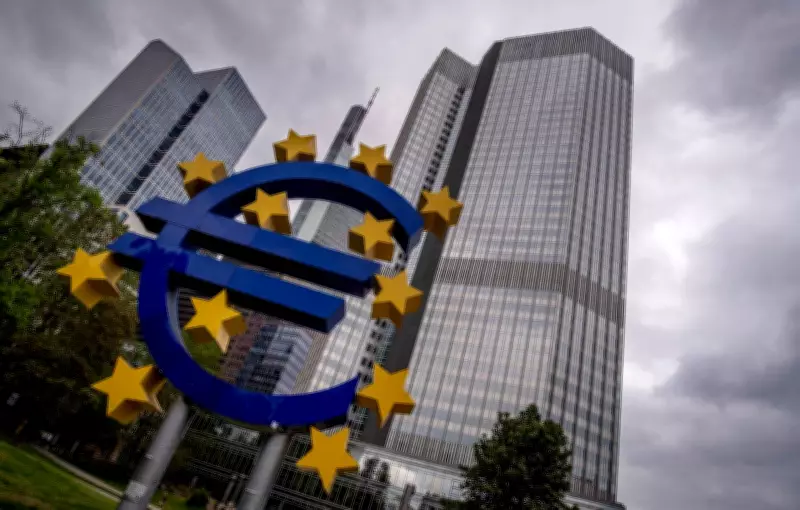
European Central Bank Maintains Key Interest Rate Amid Resilient Economic Conditions
The European Central Bank (ECB) has announced its decision to maintain its benchmark interest rate at the current level, reflecting confidence in the eurozone's economic resilience. This move comes as policymakers assess ongoing inflationary pressures and growth dynamics across the 20-nation currency bloc.
Economic Backdrop Supporting the Decision
The ECB's governing council, meeting in Frankfurt, Germany, determined that existing monetary policy remains appropriate given current economic indicators. Recent data suggests that eurozone economic activity has demonstrated notable resilience despite facing multiple headwinds, including geopolitical tensions and energy market volatility.
This decision marks a continuation of the cautious approach the central bank has adopted in recent months as it balances the need to control inflation with supporting economic expansion. The eurozone economy has shown surprising strength in several key sectors, though growth remains modest by historical standards.

Analysis of the Monetary Policy Stance
Financial analysts note that the ECB's decision reflects a careful calibration of policy tools. The central bank appears to be taking a measured approach to monetary normalization, avoiding abrupt changes that could disrupt financial markets or undermine economic momentum.
Several factors contributed to this policy decision:
- Stable but moderate economic growth across most eurozone countries
- Gradual moderation of inflationary pressures from previous peaks
- Continued uncertainty in global economic conditions
- The need to support the ongoing economic recovery phase
Broader Economic Context and Future Outlook
The ECB's announcement comes amid a complex global economic landscape. While the eurozone has demonstrated resilience, policymakers remain vigilant about potential risks that could affect the region's economic trajectory. These include:
- Geopolitical developments affecting trade and energy markets
- Persistent inflationary pressures in certain sectors
- Diverging economic performance among eurozone member states
- Global financial market volatility
Looking ahead, economists anticipate that the ECB will continue to monitor economic data closely, with future policy adjustments likely to be gradual and data-dependent. The central bank's communication suggests a preference for maintaining stability while remaining prepared to respond to changing economic conditions as needed.
The decision to hold rates steady provides businesses and consumers with continued policy predictability, which may support investment and spending decisions in the coming months. However, the ECB has emphasized that its future actions will remain contingent on incoming economic data and the evolving inflation outlook.






