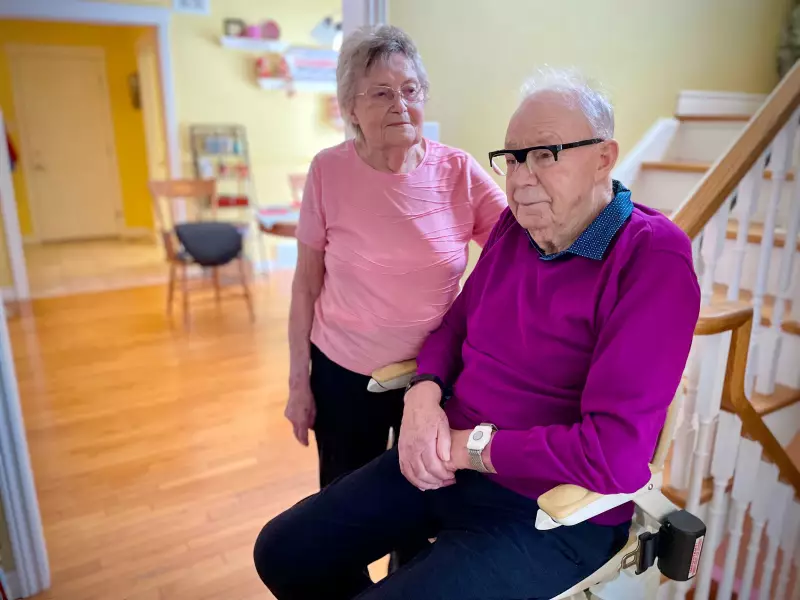
An elderly couple from Mount Forest, Ontario, faced a harrowing ordeal this week, trapped in their own home for several days after the mechanical stairlift they depend on stopped working. Mac Love, 98, and his wife Shirley Love, 89, were unable to navigate the stairs in their residence, leaving them isolated and without a way to access essential areas of their home.
A Critical Accessibility Device Fails
The couple relies on an Acorn stairlift to move between floors in their house. The device, a vital piece of equipment for their daily mobility and independence, malfunctioned, effectively imprisoning them. The incident, which began earlier in the week, was documented on January 16, 2026. For seniors who have chosen to age in place, such technological failures can quickly escalate from an inconvenience to a serious health and safety crisis, cutting them off from food, medication, or the ability to summon help.
Mount Forest Community Responds
The situation underscores the vulnerabilities faced by aging populations, particularly in rural communities like Mount Forest. While the specific resolution to the Loves' predicament wasn't detailed in the initial report, cases like these often require intervention from family, community support services, or emergency repair technicians. The event raises pressing questions about the reliability of in-home support systems and the safety nets available for seniors when those systems fail. It also highlights the importance of having contingency plans for individuals who depend on mechanical aids for basic mobility within their homes.

Broader Implications for Senior Care
This incident is not isolated. As more Canadians choose to live independently in their later years, the demand for reliable home care technology and swift repair services grows. A broken stairlift or wheelchair ramp can have immediate and severe consequences. The ordeal experienced by Mac and Shirley Love serves as a stark reminder for families, caregivers, and policymakers to ensure robust support networks and rapid response protocols are in place to protect our most vulnerable citizens from being stranded in their own homes.