

Cuba is grappling with a profound and ongoing energy crisis, with its national power grid currently producing only enough electricity to meet approximately half of the country's total demand. This severe shortfall has led to widespread blackouts and significant disruptions for residents and businesses across the island nation.
Chronic Infrastructure Failures and Daily Impact
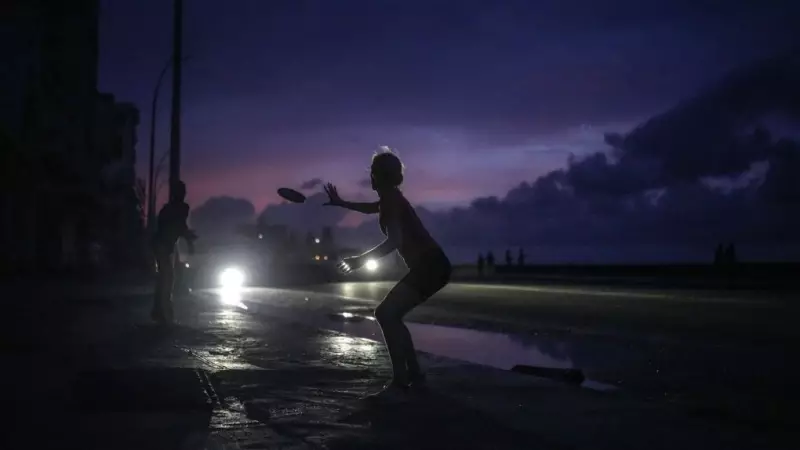
The crisis is not a new phenomenon but represents the culmination of years of infrastructure challenges. A pivotal moment occurred on Friday, October 18, 2024, when a major power plant failure plunged the capital, Havana, into a massive blackout. The scale of the failure was captured in an Associated Press photograph showing residents, including a woman preparing to catch a frisbee, attempting to maintain normalcy amid the widespread darkness. Such events have become emblematic of the unreliable state of Cuba's aging energy system.
This persistent energy deficit forces authorities to implement rotating blackouts, leaving communities without power for hours or even days at a time. The lack of reliable electricity affects everything from household refrigeration and lighting to commercial operations, healthcare services, and communication networks. The daily lives of millions of Cubans are dictated by unpredictable power schedules, creating economic strain and compounding existing hardships.

International Context and Travel Advisory
The energy crisis occurs within a complex international landscape. Notably, the Canadian government has issued a travel advisory for its citizens, urging them to "exercise a high degree of caution" when considering travel to Cuba. While advisories consider multiple factors, the instability of essential services like power is a significant concern for visitor safety and security.
Furthermore, the situation in Cuba stands in stark contrast to energy discussions in Canada, where recent news highlights domestic issues such as Calgary lifting water restrictions, WestJet revising plans to reduce legroom, and various provincial matters from Nova Scotia's lobster industry to a new crisis response unit in Brandon, Manitoba. The Cuban crisis underscores the vast disparities in infrastructure resilience and resource management between nations.
Broader Implications and Uncertain Future
The inability to generate sufficient power points to deeper systemic issues, including decades-old equipment, a lack of investment for maintenance and upgrades, and fuel shortages. This energy paralysis stifles economic productivity and hampers recovery efforts in other sectors. Without a substantial and sustained intervention to modernize the power generation and distribution network, the cycle of shortfalls and blackouts is likely to continue indefinitely.
For the people of Cuba, the reality is a daily struggle against the dark. The image of life continuing during a blackout—a simple game of frisbee in Havana—powerfully illustrates the resilience of citizens facing chronic infrastructure failure. However, resilience alone cannot power a nation. The resolution of Cuba's energy crisis remains a fundamental prerequisite for any meaningful progress toward stability and growth, a fact underscored by the stark statistic that the grid currently meets only 50% of national demand.






