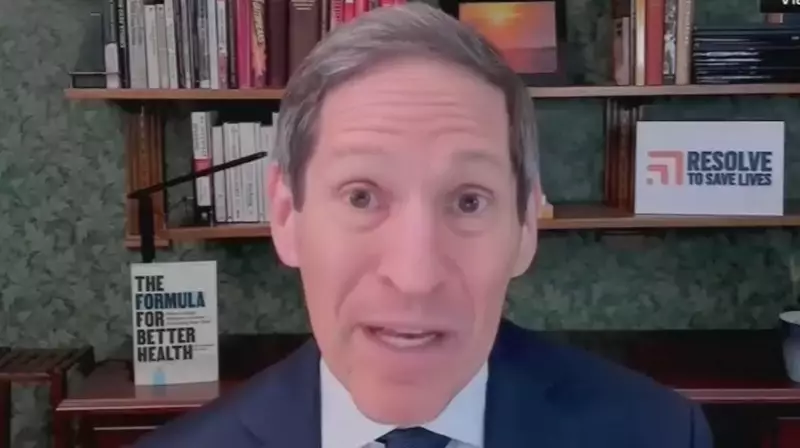
A former director of the U.S. Centers for Disease Control and Prevention has publicly condemned a recent vote by a key vaccine advisory panel to rescind a decades-old recommendation for universal hepatitis B vaccination in newborns.
A Controversial Vote Sparks Outcry
On Friday, the Advisory Committee on Immunization Practices (ACIP) voted 8-3 to change its long-standing guidance. The panel, whose members were appointed by Health Secretary Robert F. Kennedy Jr., now recommends the birth dose of the hepatitis B vaccine only for infants whose mothers test positive for the virus. This marks a significant departure from the universal recommendation that has been standard for thirty years.
Tom Frieden, who led the CDC under President Barack Obama, appeared on CNN to voice strong opposition. "This is a big mistake that would endanger American children. Don’t mess with success," Frieden stated. He now serves as president and CEO of the global health nonprofit Resolve to Save Lives.

Experts Defend Universal Vaccination
Frieden emphasized that the universal birth dose has been a safe and effective public health measure. He noted it has not resulted in "any significant harm to children" since its inception and has prevented thousands, "maybe millions," of infections.
Hepatitis B is a serious liver infection that can lead to liver cancer, cirrhosis, and liver failure, with infants and children being particularly vulnerable. Frieden stressed that the virus is not only transmitted from mother to child, which is why the universal approach is considered the medical standard of care.
"This is basically infusing fiction-based rather than fact-based recommendations into the protection of our children," he argued, calling the panel a "handpicked, unscientific group of people."
Calls to Ignore the New Guidance
The decision has been met with criticism from numerous medical experts. Frieden called on healthcare professionals and institutions to disregard the panel's new recommendation.
"What I hope will happen is that insurers, states, cities, obstetricians, pediatricians will look at this and say there is no scientific credibility to this recommendation," Frieden said. He framed the vote as a "violation of all of the basic principles of effective protection," while reaffirming that every vaccine is administered with informed consent.
The move highlights a growing tension between established public health protocols and new political appointments influencing health policy, setting the stage for potential confusion in clinical practice across the United States and raising concerns for public health advocates in Canada monitoring cross-border policy shifts.