When B.C. Provincial Health Officer Bonnie Henry was asked last week why the province's overdose deaths were suddenly in steep decline, she answered that multiple factors were responsible. Fewer teens were using drugs, greater public awareness of overdose symptoms, and expanded access to health and social supports were among the reasons she cited, according to a report in the Times Colonist. Henry also mentioned the availability of naloxone, despite its free distribution since 2017.
Decriminalization's End Coincides with Declining Deaths
The one factor Henry did not mention was how the falloff in drug deaths tracked closely with the end of a program she had enthusiastically supported: drug decriminalization. The experimental three-year policy, which began Jan. 31, 2023, allowed adults to possess up to 2.5 grams of heroin, fentanyl, methamphetamine, and other illicit drugs without facing criminal charges. Its introduction corresponded with a surge in fatal overdoses unmatched in Canadian history, and its end in 2024 corresponded with a sharp decrease in drug deaths.
According to critics who opposed decriminalization from the start, the numbers demonstrate a clear cost in lives. B.C. Conservative MLA Elenore Sturko wrote on June 16, 2026: "I fought hard along with others to end the NDP's drug decriminalization & 'safe supply' experiments and to move towards recovery because it's the right thing to do. Now, overdose deaths have dropped by a third in B.C. over the past year, a period that coincides with the NDP ending those very drug experiments."

Public Drug Use and Policy Failure
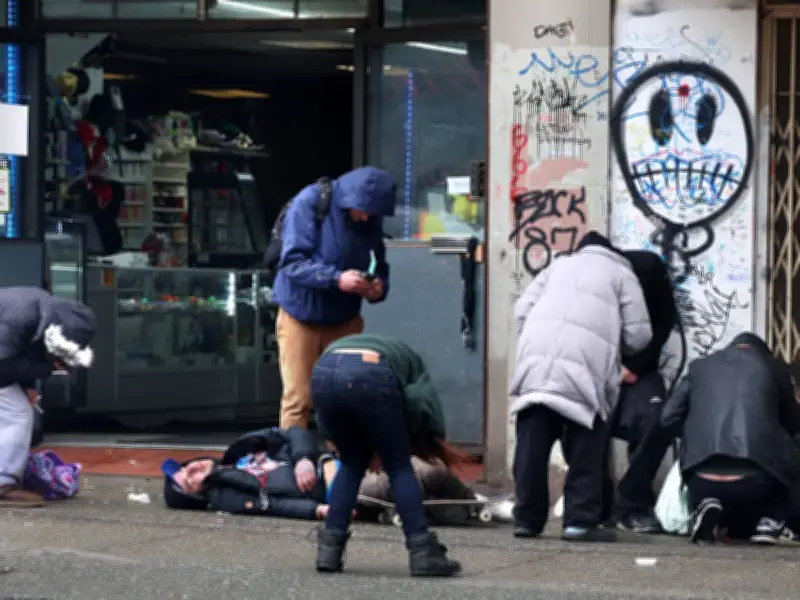
The decriminalization policy was launched under the slogan "decriminalizing people who use drugs," with assurances that it would reduce barriers and stigma. However, it led to widespread public drug use, with police unable to intervene beyond suggesting health supports. B.C. Premier David Eby acknowledged the failure in a November 2024 speech to the Urban Development Institute, stating that decriminalization became "a permissive structure" that taught drug users "it was OK to use drugs anywhere." He added, "I was wrong on decriminalization and the effect that it would have."
Data from the B.C. Coroners Service shows that overdose deaths peaked at 2,511 in 2023, the first full year of decriminalization, before falling to 1,678 in 2024—a 33% decline. The trend has continued into 2025, with preliminary figures indicating a further 15% drop. In contrast, the five-year average before decriminalization (2018-2022) was 1,850 deaths per year.
Critics and Proponents Respond
Sturko's statement drew praise from recovery advocates, who argued that ending decriminalization and scaling back safe supply programs redirected resources toward treatment. Meanwhile, supporters of decriminalization, including Henry, maintain that multiple factors are at play. Henry noted that expanded access to health services and a decline in youth drug use likely contributed. However, she did not provide data linking these factors to the timing of the decline.
The debate continues as B.C. navigates its drug policy. The province has shifted focus to a "recovery-oriented" approach, including increased funding for detox beds and addiction treatment. Critics argue that the decriminalization experiment cost lives, while proponents say it reduced stigma and saved some through harm reduction. The data, however, shows a clear correlation between the policy's end and falling overdose rates.