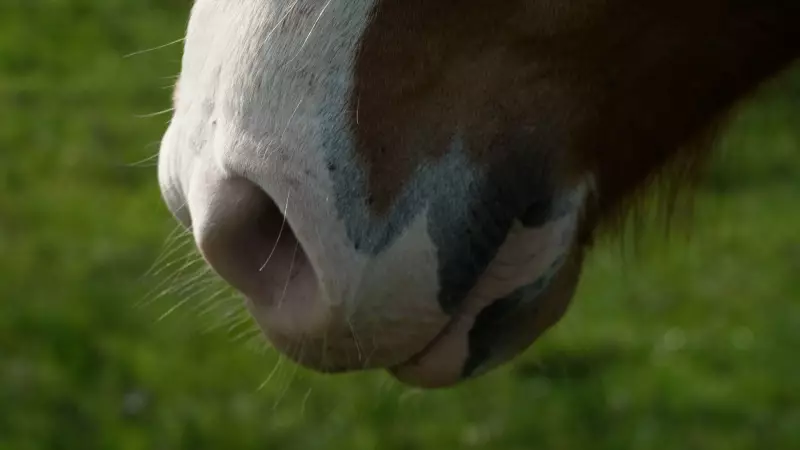
New scientific research has confirmed what many riders and equestrians have long suspected: horses possess the remarkable ability to detect fear in humans through their sense of smell. The study, published in early 2026, provides concrete evidence for this form of cross-species communication.
The Science Behind the Sniff
The research focused on analyzing the chemical signals, or chemosignals, that humans emit when experiencing different emotional states, particularly fear. Scientists collected sweat samples from human volunteers in both calm and fear-induced situations. These samples were then presented to a group of study horses in a controlled environment.
The horses exhibited significantly different behavioral and physiological responses when exposed to the "fear sweat" compared to the sweat collected during calm states. Their heart rates increased, and they displayed more vigilant and stress-related behaviors, such as increased head movements and a heightened state of alertness. This indicates they not only detect the odor but also process it as a potential threat signal.

Implications for Human-Equine Relationships
This discovery has profound implications for anyone who works with or around horses, from professional trainers and veterinarians to recreational riders. It validates the importance of a handler's own emotional state when interacting with these sensitive animals.
If a person is anxious or afraid, a horse is likely picking up on that chemical cue, which may explain why horses sometimes behave unpredictably with nervous individuals. The study suggests that managing one's own fear is not just a psychological exercise but a practical component of safe and effective horse handling.
A Confirmation of Ancient Knowledge
While the scientific method has now provided empirical data, the concept that horses are attuned to human emotions is ancient. The new research, however, pinpoints the specific mechanism—olfaction—as a key channel for this emotional transfer. It highlights the sophistication of the equine olfactory system, which appears capable of distinguishing subtle biochemical changes associated with human emotional arousal.
This finding adds to a growing body of evidence on interspecies communication and underscores the deep, often non-verbal, connection that can exist between humans and animals. For the equestrian community in Canada and around the world, it serves as a fascinating reminder of the sensitivity and intelligence of their equine partners.