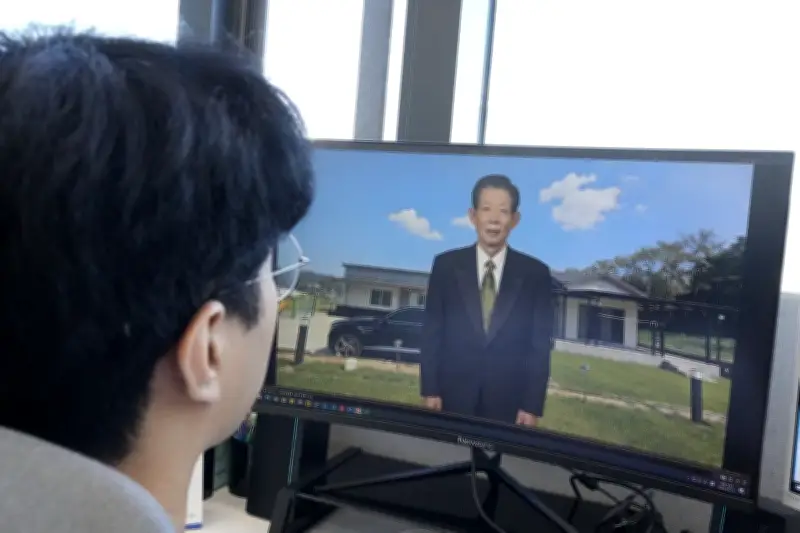
AI Avatars Offer Solace to the Bereaved in South Korea
Lee Geon Hui gazes at a computer screen as a video clip plays showing a digital likeness of his late grandfather speaking. The footage was created by Vaice, a Seoul-based tech firm that specializes in generating AI-powered video avatars of deceased loved ones. The service is gaining traction among grieving South Koreans seeking comfort in seeing and hearing their lost family members again.
How the Technology Works
Vaice's system uses photographs, video clips, and audio recordings of the deceased to train a generative AI model. The resulting avatar can speak in the person's voice, using typical phrases and mannerisms. According to the company, the process takes about two weeks and costs between 1,000 and 2,000 U.S. dollars, depending on the complexity. The avatar can be displayed on a computer screen, tablet, or even a smartphone, allowing users to interact with it in real time.
“It feels like he is really here with me,” Lee Geon Hui said in an interview. “I can ask him questions and hear his advice, just like before he passed away.” The service has drawn both praise and criticism, with some experts warning about potential psychological risks.

Rising Demand in a Grieving Society
South Korea has one of the highest suicide rates among developed nations, and grief counseling resources are often limited. Vaice reports that since launching the service in early 2025, it has served over 500 clients. The company plans to expand its offerings to include 3D holograms and virtual reality experiences. “We are not trying to replace the dead, but to help the living cope with loss,” said Kim Min-jun, CEO of Vaice.
Ethical Concerns and Expert Opinions
Mental health professionals have raised concerns about the long-term effects of interacting with AI avatars of deceased loved ones. Dr. Park Soo-kyung, a psychologist at Seoul National University, warned that such technology could hinder the natural grieving process. “Grief requires acceptance of loss,” she said. “An avatar that speaks and acts like the deceased may prolong denial and prevent emotional healing.” Vaice counters that they offer counseling sessions and provide clear disclaimers that the avatar is not a real person.
Global Interest and Future Plans
Vaice has received inquiries from families in Japan, the United States, and Europe. The company is also developing a service that allows users to create avatars of historical figures or celebrities for educational purposes. As AI technology advances, the line between memory and simulation continues to blur, raising profound questions about grief, identity, and human connection.