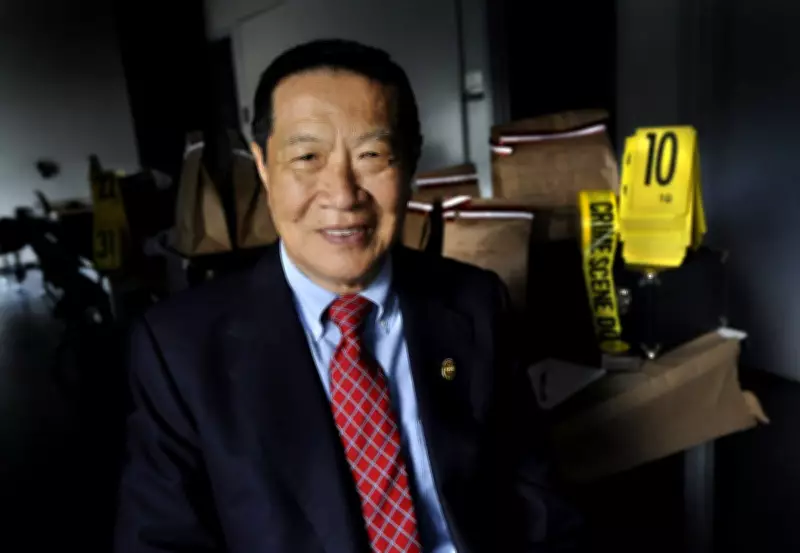
Dr. Henry Lee, the celebrated forensic scientist whose expert testimony became a defining element of the OJ Simpson murder trial in the 1990s, has died at the age of 87. His passing marks the end of an era for forensic science, a field he helped bring into the public consciousness through high-profile cases.
A Legacy Built on Evidence
Dr. Lee's career spanned decades and was characterized by a meticulous, evidence-based approach that earned him international respect. He was perhaps best known to the public for his role in the 1995 trial of former football star OJ Simpson, who was accused of murdering his ex-wife Nicole Brown Simpson and her friend Ronald Goldman. Lee's analysis of blood evidence and crime scene details provided critical testimony for the defense, challenging the prosecution's narrative and contributing to the case's "not guilty" verdict. His calm, methodical explanations under intense scrutiny made him a household name.
Founding an Institute for Future Investigators
Beyond the courtroom, Lee's passion was education. He founded the Henry C. Lee Institute of Forensic Science at the University of New Haven in Connecticut, an institution dedicated to training the next generation of forensic experts. The institute, which opened its doors in 1998, bears his name and reflects his commitment to advancing scientific methods in criminal investigation. He served as a professor emeritus at the university, inspiring countless students with his real-world experience and scholarly dedication.

Born in China, Lee moved to Taiwan and later to the United States, where he earned his doctorate in biochemistry. He began his forensic career with the Connecticut State Police, eventually becoming the state's chief criminalist. His work extended far beyond the Simpson case; he consulted on thousands of investigations, including the reinvestigation of the John F. Kennedy assassination and the JonBenét Ramsey case. Lee was often called upon for his ability to reconstruct complex crime scenes and interpret minute traces of evidence.
An Enduring Impact on Justice
Colleagues and legal experts describe Lee as a pioneer who modernized forensic techniques and emphasized the importance of scientific rigor in the justice system. "He taught us that evidence doesn't lie," said one former student. "His legacy is not just in the cases he solved, but in the standards he set for the entire field." Despite occasional controversy over some of his conclusions, his contributions to forensic science are widely acknowledged as foundational.
Dr. Henry Lee is survived by his family and a global community of forensic professionals he mentored. His death was confirmed by associates, though specific details regarding the cause were not immediately disclosed. As news of his passing spreads, tributes are pouring in from the legal, academic, and law enforcement communities, all recognizing a man whose work forever changed how crimes are investigated and understood.